- Best all-round winter trip: February and March
- Christmas and Santa: December
- Deep snow and Arctic atmosphere: January and February
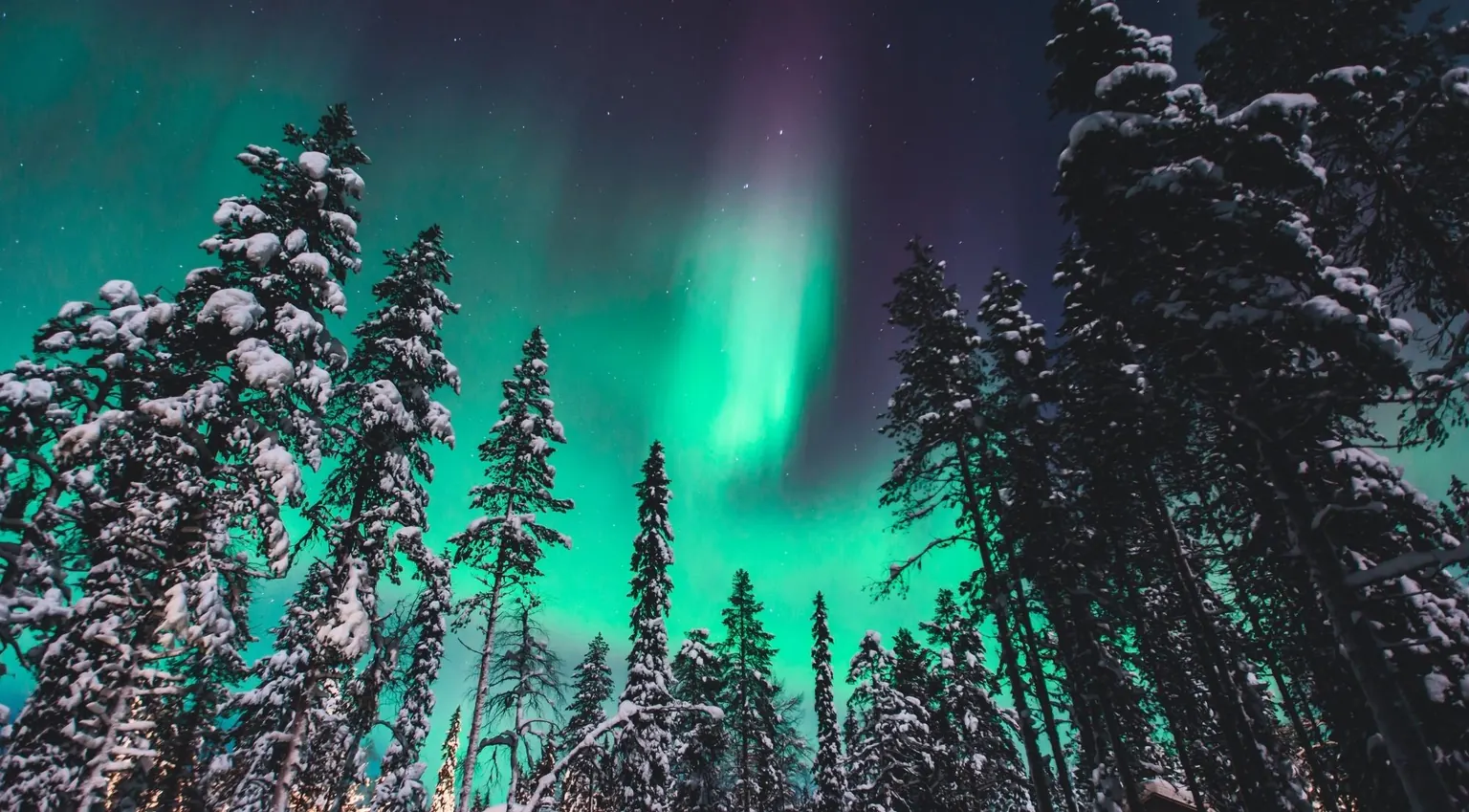
- Northern Lights season: late August to early April, strongest in September–October and February–March
- Aurora reflections on unfrozen lakes: September
- Midnight Sun: early June to early July around Rovaniemi
- Too light for aurora viewing: May to July
Quick answer: For the classic snowy Lapland trip, February or March is usually the best all-round time to visit. You get deep snow, husky and reindeer safaris, snowmobiling, far more daylight than at Christmas and a good chance of the Northern Lights, because both months fall in one of the strongest aurora periods around the spring equinox. Choose December if Santa is the reason you’re coming, January for deep winter and long dark nights, September for autumn colours plus auroras, and June or July for the Midnight Sun.
Best time to visit Lapland at a glance
| What you want | Best time |
|---|---|
| Best overall winter trip | February–March |
| Christmas and Santa | December |
| Deep snow and Arctic atmosphere | January–February |
| Northern Lights with snow | February–March |
| Northern Lights without deep winter | September–October |
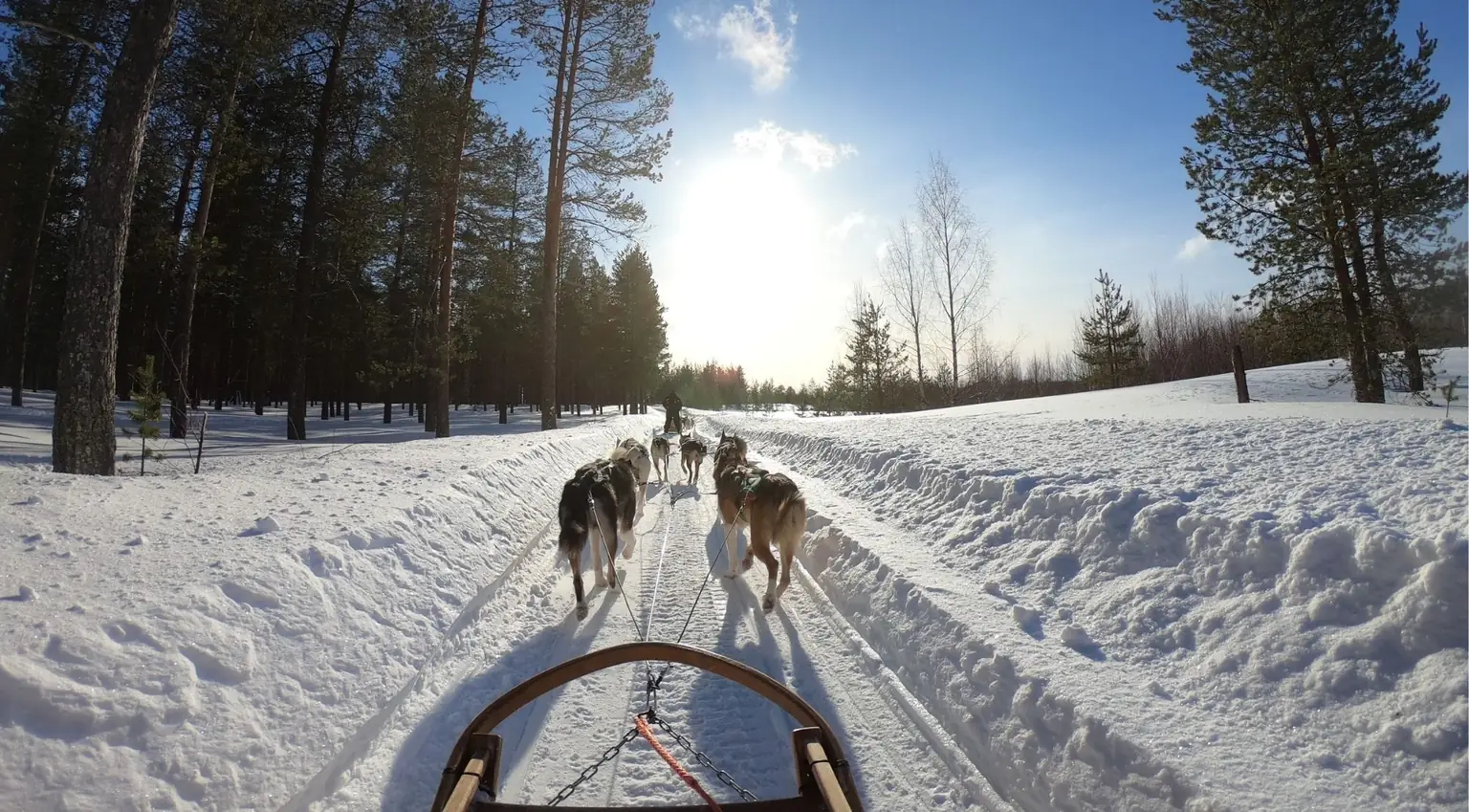
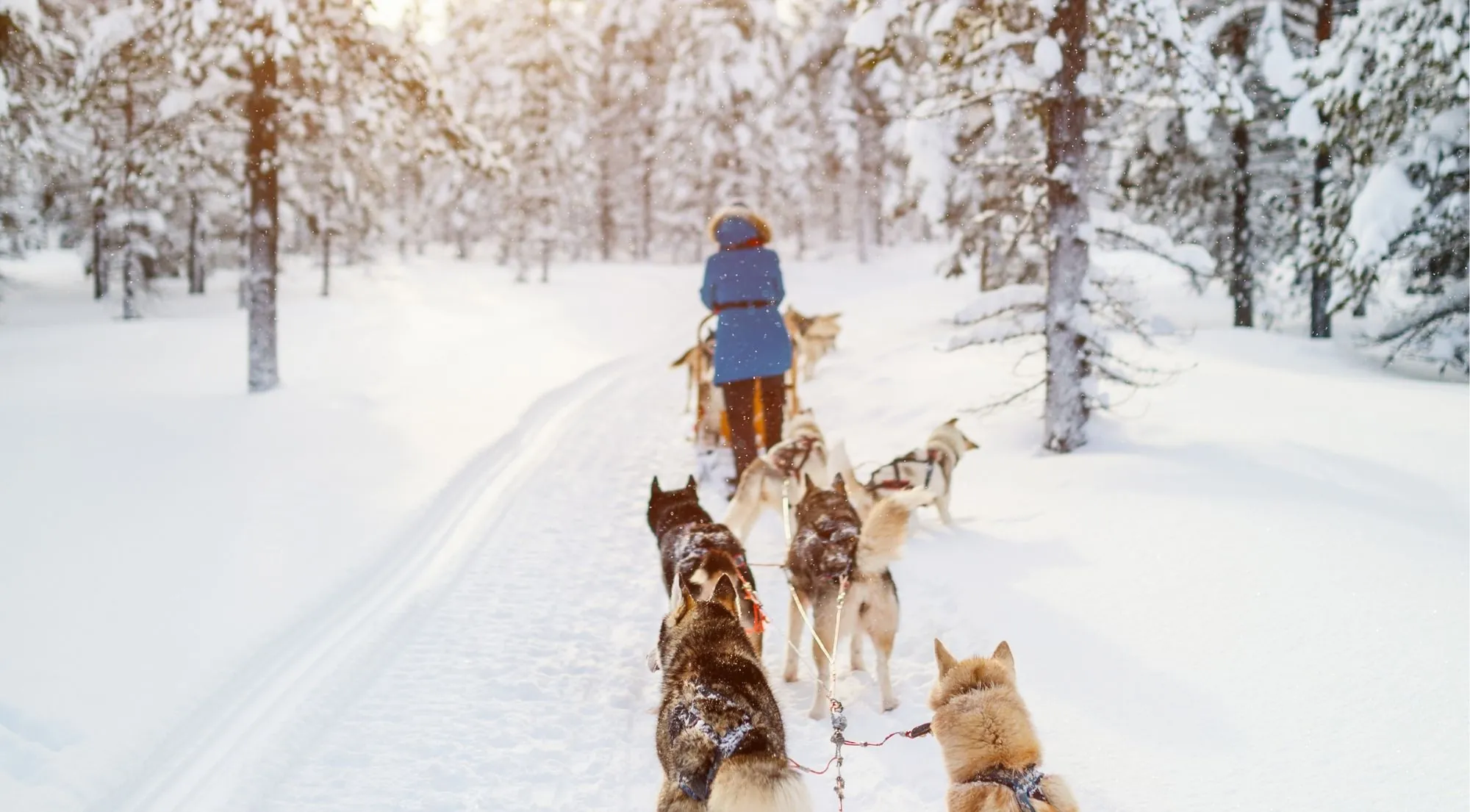
| Husky sledding | December–March |
| Reindeer sleigh rides | December–March |
| Snowmobiling | January–March |
| Skiing | February–April |
| More daylight with snow | March |
| A quieter winter trip | January or March, outside school holidays |
| Autumn colours | Mid-September |
| Midnight Sun | Early June to early July in Rovaniemi; longer farther north |
| Hiking | June–September |
| Avoiding Christmas crowds | January, March, September |
| Warmest weather | July |
Our pick for most first-time visitors: late February to mid-March. You still get the Lapland most people picture, with thick snow, frozen forests, huskies, reindeer and aurora nights, plus enough daylight to see the landscape you came for.
How Lapland changes through the year
There isn’t one “Lapland season”. Rovaniemi’s own seasonal guide gives average daylight of only about 2.5 hours in December, against roughly 4 hours in January, 8 in February, 12 in March and 15 in April. By June, daylight lasts 24 hours (Visit Rovaniemi).
That changes your trip. A husky safari in December may start in blue Arctic twilight and finish in the dark. The same safari in March can run under a bright blue sky, with sunlight on metre-deep snow. Neither is better: they are two very different versions of Lapland.
When should you go? Month by month in brief
If you need to choose dates quickly, start here.
Go in December if…
You want:
- Santa Claus
- Christmas lights
- the most festive atmosphere
- snowy family photos
- Christmas Eve in Lapland
- Santa Claus Village at its most Christmassy
Accept:
- very little daylight
- peak demand
- expensive accommodation around Christmas
- busy attractions
- booking activities early
Our guide to Christmas in Lapland covers December trips in detail.
Go in January if…
You want:
- deep Arctic winter
- fewer Christmas visitors
- long, dark aurora-viewing nights
- forests heavy with snow
- huskies, reindeer and snowmobiles
- a quieter atmosphere than Christmas week
Accept:
- the chance of extreme cold
- short days
Go in February if…
You want:
- dependable winter scenery
- more daylight
- Northern Lights chances
- excellent snow activities
- a good family winter holiday
This is one of the easiest months to recommend.
Go in March if…
You want:
- deep snow
- long daylight hours
- excellent skiing
- huskies and snowmobiles
- brighter, often more comfortable winter days
- strong aurora potential after dark
If Christmas doesn’t matter to you, March may be Lapland’s sweet spot.
Go in September if…
You want:
- the Northern Lights
- autumn foliage
- hiking
- unfrozen lakes
- milder temperatures
- fewer winter-tour crowds
You will not get the classic snowy Christmas-card Lapland.
Go in June or July if…
You want:
- the Midnight Sun
- hiking
- canoeing
- cycling
- long warm days
- Lapland without snow
You will not see the Northern Lights, because the nights are too bright (Visit Finland).
Best time for snow in Lapland
For most international visitors, Lapland means snow. If snow is non-negotiable, aim for January to March.
December is normally snowy in Rovaniemi, and the official tourism guide calls it “most likely snowy”, but early winter is always less certain than midwinter. November is less dependable still, because lasting winter conditions arrive at different times each year (Visit Rovaniemi). By January and February you are well into winter, and March keeps the deep snow while daylight has grown dramatically.
Best months for a classic snow holiday
- February: plenty of snow and increasingly useful daylight.
- March: deep snow, long days and excellent outdoor conditions.
- January: wonderful winter atmosphere, but colder and darker.
- December: the most festive, but the busiest and darkest.
Best time to see the Northern Lights in Lapland
The Northern Lights season in Finnish Lapland runs from about late August to early April, when the skies are dark enough to see auroras. Visit Finland names September–October and February–March as particularly active periods, around the autumn and spring equinoxes (Visit Finland).
Best aurora months
| Month | Aurora potential | Snow? | Overall experience |
|---|---|---|---|
| Late August | Possible | No | Mild, dark nights returning |
| September | Excellent period | No | Aurora and autumn colour |
| October | Excellent period | Possible | Darker, transitional |
| November | Good | Variable | Dark, but snow less predictable |
| December | Good | Usually | Very dark, plus Christmas |
| January | Good | Yes | Deep winter |
| February | Excellent period | Yes | One of the best combinations |
| March | Excellent period | Yes | Aurora, daylight and snow |
| Early April | Possible | Usually | Nights quickly getting brighter |
Cloud matters more than the calendar. A strong aurora above thick cloud is invisible, while a modest one on a crystal-clear night can be spectacular. Visit Finland says auroras are seen on roughly every second clear night in Lapland during the season, which is why several nights give you a far better chance than one (Visit Finland).
December is not automatically the best month for the Northern Lights just because it is the darkest. Darkness is necessary, but it is only one part of the equation. To see the aurora you need:
- darkness,
- auroral activity,
- sufficiently clear sky,
- and a location where clouds and artificial light are not blocking the view.
So the best month depends partly on what else you want from Lapland. If you want Christmas, come in December. If you want the best combination of Northern Lights + snow + winter activities + more daylight, look hard at February and March. If the aurora itself is your priority and you don’t need snow, September can be superb.
When is Northern Lights season in Lapland?
The practical Northern Lights season in Finnish Lapland runs from approximately:
late August → early April
Auroras themselves occur throughout the year. The problem during the Arctic summer isn’t that the aurora disappears — it is that the sky does not become dark enough to see it.
Visit Finland gives late August to early April as the general season, while Rovaniemi uses almost exactly the same window.
By May, the nights in Lapland are becoming too bright.
Around midsummer, parts of northern Finland experience the Midnight Sun, with daylight around the clock.
So if the Northern Lights are one of your main reasons for travelling, don’t plan a June or July Lapland trip and expect to see them.
Best months for Northern Lights in Lapland at a glance
| Month | Aurora potential | Snow | Darkness | Crowds | Best for |
|---|---|---|---|---|---|
| Late August | Fair | Usually none | Limited | Low | Earliest aurora trips |
| September | Excellent | Usually little/no snow | Good | Low | Aurora + autumn colours |
| October | Excellent | Possible | Very good | Low-medium | Aurora-focused trips |
| November | Very good | Increasing | Excellent | Medium | Early winter |
| December | Very good | Usually snowy | Maximum | Very high | Christmas + aurora |
| January | Very good | Deep snow | Maximum | Medium | Arctic winter |
| February | Excellent | Deep snow | Excellent | Medium | Best all-round winter trip |
| March | Excellent | Deep snow | Very good | Medium | Aurora + winter activities |
| Early April | Fair-good | Often snow | Declining | Lower | Skiing + possible aurora |
| May–July | Poor/impossible to view | Little/none | Too bright | Varies | Midnight Sun instead |
The key phrase is aurora potential, not guarantee.
No month can guarantee clear skies.
What is the single best month to see the Northern Lights in Lapland?
If we had to choose one month for a first trip, we would choose:
March.
Not because March necessarily produces vastly more auroras than every other month.
It is because March gives you an unusually strong combination of:
- good aurora potential
- plenty of darkness
- deep winter snow
- longer daylight for daytime activities
- generally more usable outdoor conditions than the coldest midwinter period
- husky tours
- reindeer excursions
- snowmobiling
- skiing
- frozen landscapes
The Finnish Meteorological Institute notes that, once weather conditions are taken into account, March and early April are particularly favourable periods for aurora observation in northern Finland.
For someone building an entire Lapland holiday — rather than travelling purely for astrophotography — that balance is hard to beat.
Why September and March are so good
Northern Lights activity tends to increase around the equinoxes.
These occur around:
- 20–23 March
- 22–23 September
The effect is related to how Earth’s magnetic field interacts with the solar wind around the equinox periods.
Visit Finland specifically identifies September–October and February–March as peak aurora periods.
You don’t need to arrive on the exact date of an equinox.
Think of this as a broader seasonal advantage rather than a magical two-day window.
Lapland in August
Verdict: Summer that turns towards autumn; auroras possible late in the month, but don’t choose August solely for them
August starts as summer and ends with a hint of autumn. Rovaniemi averages about 17 hours of daylight, with temperatures usually around 10–20°C (Visit Rovaniemi). By late August, the nights are dark enough again for the first Northern Lights sightings (Visit Finland), so you can combine hiking, berry picking, mild weather, open water and the start of the aurora season. Don’t travel expecting snow.
Northern Lights season begins to wake up as darkness finally returns after the Midnight Sun.
In Rovaniemi, auroras can begin appearing from late August.
What August is like
Expect:
- largely snow-free landscapes
- relatively mild temperatures
- forests rather than white winter scenery
- very short or absent darkness early in the month
- improving viewing opportunities toward the end
This is not the Lapland most people know from Christmas photographs.
But it can be beautiful.
Choose August if:
- you’re already visiting Finland
- you want hiking and outdoor activities
- you dislike severe cold
- seeing an aurora would be a bonus
Don’t choose August if:
- the Northern Lights are your main reason for travelling
- you want snow
- you want husky sledding across frozen landscapes
Lapland in September
Verdict: Lapland’s best month outside winter, and one of the best for serious aurora watching
September is ruska season, the short Arctic autumn when birch forests, shrubs and ground plants turn yellow, orange and red. Around Rovaniemi the colours usually peak from mid- to late September, though the timing varies with weather and place (Visit Rovaniemi). Darkness has returned by then, so September gives you two things winter can’t: autumn colour and Northern Lights reflected in unfrozen water.
September may be the most underrated Northern Lights month in Lapland.
The nights have returned.
Auroral activity tends to be favourable around the autumn equinox.
Temperatures are considerably easier to handle than in January.
And many lakes have not frozen yet.
Visit Finland highlights September as part of one of the strongest aurora periods and notes the special opportunity to see the lights reflected in unfrozen water.
Why September is special: the double aurora
A calm lake can mirror the Northern Lights.
Instead of an auroral arc only above you, you can see:
aurora + reflection
Photographers sometimes call this a double aurora.
Once the lakes freeze and become snow covered, those mirror-like reflections disappear.
For photographers, that alone is a compelling reason to consider September.
September advantages
- strong aurora potential
- autumn equinox period
- darker nights
- comparatively mild temperatures
- fewer winter tourists
- colourful ruska foliage
- unfrozen lakes
- easier driving conditions
- good hiking and road trips
September disadvantages
- usually no snowy Christmas landscape
- winter safaris may not yet operate
- traditional husky sledding is generally dependent on snow
- some winter attractions have not fully started
- no reindeer sleigh rides, snowmobiling or snowy Santa photos
Best for
Photographers, hikers, couples and visitors who care more about the aurora than Christmas scenery.
Lapland in October
Verdict: Excellent for auroras, quieter than winter, unpredictable on the ground
October sits between autumn and winter, which makes it either fascinating or frustrating. Rovaniemi usually sees temperatures around 0–10°C and about nine hours of daylight, and snow becomes possible (Visit Rovaniemi). You might meet late autumn, frost, early snow, slush, or a white landscape that melts again a week later.
October is another excellent aurora month.
Visit Finland describes October–November as prime aurora season, with long dark nights and strong autumn auroral activity.
October occupies an interesting transition.
Early in the month, you might still see autumn.
Later in October, the landscape may begin shifting toward winter.
Why October is attractive
You get:
- substantial darkness
- strong aurora potential
- relatively modest crowds
- cheaper conditions than Christmas in many cases
- the possibility of early snow
Visit Rovaniemi also promotes October as part of early winter, noting that Northern Lights are already visible even before permanent snow cover arrives.
The downside: unpredictable snow
This is the big one.
If your dream includes:
- dog sleds
- reindeer sleighs
- snowmobiles
- deep snowbanks
- frozen forests
October can be too early.
Never assume that an October Lapland trip will look like a December Christmas brochure.
Best for
Aurora-focused travellers who don’t require guaranteed winter scenery.
Lapland in November
Verdict: Very good for auroras, but an awkward transitional month on the ground
November is tempting: Christmas attractions are opening, darkness is plentiful and prices can look good next to Christmas week. Its one big risk is that snow isn’t yet as dependable as it becomes later in winter. Visit Rovaniemi describes November snow as possible, with temperatures of roughly -10°C to +5°C and daylight shrinking from about seven hours early in the month to about five later on (Visit Rovaniemi). Some years look wonderfully wintry; others bring a mix of snow, rain, ice and bare ground.
By November, nights are long and Lapland is moving decisively toward winter.
Aurora viewing can be excellent.
Snow is increasingly likely, particularly farther north.
But November can be less predictable than December–March if your trip depends on specific snow activities.
Why go in November?
- long nights
- good Northern Lights possibilities
- lower demand than peak Christmas weeks
- increasingly wintry landscapes
- many winter tourism businesses starting operations
Potential downside
Early-season snow conditions can vary.
If you’re booking a trip specifically around:
- snowmobiling
- long husky safaris
- skiing
check what is actually operating at your destination.
Should you book November?
Yes, if auroras matter more than snow, you’re flexible about activities and you enjoy quiet seasonal changes. Be more careful if the whole trip rests on husky sleds, snowy forest photos, reindeer sleighs or a guaranteed white landscape. Late November is usually safer than early November, but the weather never comes with guarantees.
Best for
Travellers wanting darkness and early winter without peak Christmas pricing.
Lapland in December
Verdict: Brilliant for Christmas and the overall Lapland experience, not uniquely superior for auroras
December is the month most people associate with Lapland.
It gives you:
- snow-covered forests
- Christmas lights
- Santa Claus Village
- reindeer
- huskies
- extremely short days
- long aurora-viewing windows
Around Rovaniemi and especially farther north, December brings some of the darkest days of the year. Visit Rovaniemi gives roughly 2.5 hours of average daylight and temperatures usually around -20°C to -10°C, though real conditions vary a lot (Visit Rovaniemi). Our December guide covers the month in more detail.
Visit Finland describes December and January as Lapland’s deep-winter period, when some northern areas experience polar night, or kaamos.
Is December the best month to visit Lapland?
December is the month people dream about, but it is not automatically the best one.
If you have young children and want them to feel they’ve stepped into Christmas itself, no later month recreates December. The darkness adds to it: lanterns glow against the snow, buildings stay lit most of the day, the sky spends hours in pastel blue and pink, and a reindeer ride feels magical.
You pay for that atmosphere, though:
- accommodation demand is high
- popular tours fill early
- Christmas week needs much more planning ahead
- daylight is very short
Visit Rovaniemi warns that many winter activities from December to March sell out early, and advises booking ahead (Visit Rovaniemi). If Santa isn’t a big priority, February or March usually gives you more winter for each day. For dates, dinners and Santa Claus Village opening hours, see our Christmas in Lapland guide.
Is December the best month for Northern Lights?
Not necessarily.
This is worth repeating because it is such a common assumption.
More darkness does not automatically mean more visible auroras.
You still need:
- auroral activity
- clear sky
If the sky is cloudy for three nights, the fact that it is dark for 20 hours does not help.
December is best when you want:
Northern Lights + Christmas + snow + Santa + Arctic atmosphere
rather than purely the highest statistical aurora advantage.
December advantages
- enormous amount of darkness
- beautiful snowy landscapes
- full range of winter activities
- Santa Claus experiences
- perfect Christmas atmosphere
- frozen lakes and forests
December disadvantages
- Christmas demand
- high accommodation prices
- busy attractions
- very short daylight
- cold weather
Best for
Families and first-time visitors wanting the classic Christmas Lapland experience.
Lapland in January
Verdict: Excellent for deep Arctic winter
January is quieter after the Christmas rush but remains deeply wintry.
Rovaniemi’s seasonal guide puts January temperatures at roughly -30°C to -15°C, with about four hours of daylight on average. Those are seasonal ranges, not promises: any given day can be much warmer or colder (Visit Rovaniemi).
Expect:
- extensive snow cover
- long nights
- very short days
- frozen lakes
- strong winter activity availability
- potentially severe cold
For many travellers, January feels more genuinely Arctic than December.
Christmas decorations may remain, but attention shifts from Santa toward the winter landscape itself.
Why visit in January?
January gives you forests heavy with snow, long nights, husky sledding, reindeer safaris, snowmobiling, downhill and cross-country skiing, and Northern Lights chances. Snow can build up on the spruce until whole forests look like sculptures.
The catch
The cold. January is one of the months when Lapland can show you what -25°C or -30°C feels like. Activities keep running, because operators work around Arctic conditions and usually lend thermal overalls, boots and other kit. Families with babies or toddlers should still think carefully before booking long outdoor trips.
Does extreme cold mean better Northern Lights?
Not directly.
Auroras are not caused by cold temperatures.
They occur high in the atmosphere and are driven by solar activity.
The reason brilliant auroras often seem associated with extremely cold nights is more practical:
clear winter skies can also be very cold.
Cloud acts somewhat like insulation.
So a brutally cold clear evening can simultaneously provide excellent visibility — but the cold itself did not produce the aurora.
January advantages
- long viewing windows
- deep snow
- fewer Christmas crowds
- excellent winter activities
- classic Arctic scenery
January disadvantages
- potentially extreme cold
- limited daylight
- long aurora waits can become uncomfortable
Best for
Photographers, couples and travellers wanting deep winter and long dark evenings, without Christmas celebrations.
Lapland in February
Verdict: Possibly the best all-round winter month
February is where Lapland starts becoming particularly interesting.
You still have:
- deep snow
- reliably wintry landscapes
- long dark nights
but daylight is increasing. Around Rovaniemi the tourism board gives about eight hours of daylight on average and temperatures of around -20°C to -15°C (Visit Rovaniemi). That is a big change from December: you can see the landscapes you are travelling through.
At the same time, you’re approaching the favourable spring-equinoctial aurora period.
Visit Finland specifically places February–March among Finland’s peak aurora months.
Why February works so well
During the day, you can see more of Lapland.
You have time for:
- husky sledding
- snowmobiling
- reindeer farms
- skiing
- snowshoeing
Then darkness returns for aurora hunting.
That makes February much easier to build into a rounded itinerary than the darkest weeks of December.
February advantages
- excellent aurora potential
- lots of snow
- increasing daylight
- excellent winter activity conditions
- Christmas crowds gone
February disadvantages
- still potentially very cold
- popular around European school holidays, so book the important activities before you arrive
Best for
Anyone wanting a traditional snowy Lapland holiday with strong Northern Lights potential.
Lapland in March
Verdict: Our pick for the best overall month
March combines almost everything you want.
There is usually still abundant snow across Finnish Lapland.
Days are significantly brighter.
Nights remain dark enough for aurora viewing.
And the spring-equinoctial period favours auroral activity.
Around Rovaniemi, Visit Rovaniemi characterises March as snowy spring, with approximately 12 hours of daylight and temperatures usually around -15°C to -5°C, while the Northern Lights remain possible. A full day outdoors becomes easy, and you don’t have to choose between daylight and auroras: you get both.
Why March can be better than December
In December you may spend much of your usable daylight moving between activities.
In March, you can:
snowmobile at 10am → husky sled in the afternoon → eat dinner → chase the Northern Lights at night.
The days and nights both become useful.
March advantages
- excellent aurora potential
- spring equinox
- plenty of snow
- longer days
- fantastic winter landscapes
- good skiing, downhill and cross-country
- easier photography during daylight
- generally pleasant balance between day and night
March disadvantages
- less Christmas atmosphere
- nights gradually shorten toward April
Best for
Aurora hunters who also want a full winter holiday.
Lapland in April
Verdict: Good early in the month, risky later
April is the month people underestimate. Early April can still look thoroughly wintry: in Rovaniemi snow is described as most likely, with about 15 hours of daylight and temperatures around +5 to +10°C (Visit Rovaniemi). Farther north and at the ski resorts, winter lasts longer still. Snow on the ground and sun overhead is a favourite kind of weather for many Finns, with long days, spring skiing and outdoor lunches.
Early April can still work — especially far north.
Snow may remain thick on the ground.
Winter sports can still be excellent.
But daylight increases rapidly at Arctic latitudes.
Visit Finland says the first weeks of April can still offer sightings in northern Lapland, but by the middle of the month aurora viewing becomes substantially more difficult because the nights are too bright.
Visit Rovaniemi gives similar guidance, describing auroras as possible into early April before brighter evenings increasingly interfere.
April advantages
- spring skiing
- snow still likely
- long daytime hours
- possible early-month auroras
- fewer Christmas visitors
- milder temperatures than midwinter
April disadvantages
- rapidly disappearing darkness
- unreliable aurora window later in the month
Best for
Skiers who would consider an aurora a bonus.
We would not choose late April for a trip whose principal objective is seeing the Northern Lights.
Lapland in May
May is a transition month, and for many first-time visitors one of the least useful. Snow is melting or gone around Rovaniemi, while summer has not yet properly started. Daylight averages close to 19 hours (Visit Rovaniemi).
Choose May for quiet travel, long daylight, nature waking up and city and cultural sights. Don’t choose it for dependable husky sledding, Christmas scenery, the Northern Lights or settled summer weather. If your dates are flexible, pick April for late snow or June for summer.
Can you see Northern Lights in May?
In practice, Lapland becomes too light.
There may technically be auroral activity in Earth’s atmosphere, but the sky does not become sufficiently dark for useful viewing.
Visit Rovaniemi lists Northern Lights as not visible in May, with rapidly increasing daylight.
Lapland in June
June is almost the opposite of December: instead of darkness, you get light, and a lot of it. At Rovaniemi’s latitude the Midnight Sun lasts from about early June to early July, when the sun stays above the horizon around the clock (Visit Rovaniemi). Farther north it lasts longer.
June suits hiking, cycling, canoeing, fishing, photography, sauna and lake swimming, and late-night walks that still look like daytime. You won’t get snowy Christmas forests, sledding, snowmobile safaris or visible auroras.
Can you see Northern Lights in June or July?
Essentially no.
This is Midnight Sun season.
Around Rovaniemi, the official Midnight Sun period runs from approximately early June to early July, while nights remain very light for a substantially longer period.
Farther north, continuous daylight lasts longer.
Come during summer for:
- Midnight Sun
- hiking
- lakes
- cycling
- canoeing
- wildlife
Come during the darker half of the year for the Northern Lights.
Lapland in July
July is usually Lapland’s warmest month. Visit Rovaniemi gives typical temperatures of around 20–25°C and roughly 21 hours of daylight (Visit Rovaniemi), which surprises visitors who expect the Arctic Circle to be cold all year. A July afternoon can feel properly summery, and it is the month for hiking, kayaking, cycling, fishing, national parks and family road trips.
Insects in summer
Mosquitoes come with Lapland summers, especially near wetlands and forest. They don’t make summer a bad time to travel, but insect repellent and long sleeves make hiking much more pleasant.
When is the best time to visit Rovaniemi?
For Rovaniemi itself, we would split the year like this:
| Period | Best for |
|---|---|
| December | Santa and Christmas |
| January | Deep winter |
| February | Best all-round snow holiday |
| March | Snow, daylight and aurora |
| April | Spring skiing |
| May | Quiet transition |
| June | Midnight Sun |
| July | Summer outdoors |
| August | Summer, plus the first auroras late in the month |
| September | Ruska and Northern Lights |
| October | Auroras and unpredictable early snow |
| November | Early winter transition |
Rovaniemi is only one part of Finnish Lapland. Go farther north to Saariselkä, Ivalo, Inari, Levi or Kilpisjärvi and the seasons shift: winter lasts longer and the swing in daylight is more extreme. Our Rovaniemi travel guide covers what to do in the city in each season.
Best time for husky sledding
Choose December to March for the easiest access to classic husky sledding. Some operators start in November or carry on into April when there is snow, but the core winter months are more dependable. For a once-in-a-lifetime ride, February and March appeal most, because you see the landscape during the ride.
A proper husky safari is also a different trip from a short introductory loop, so choose one with real time on the trail if your budget allows. Our pick: the Rovaniemi: Apukka Husky Adventure 6km, self-driven (from €219, 4.6/5 from more than 1,500 reviews), where you drive your own team for 6 km. See all our husky sledding tours.
Best time for reindeer sleigh rides
For the classic sleigh ride through snow, December to March is the safest target. You can visit reindeer farms outside winter too, but the visit changes: in summer you meet and feed the reindeer, while in winter you get the sleigh, the snow, the forest, the blankets and the Arctic quiet. If that is the picture in your head, come in winter.
Our pick: the Rovaniemi: 2km Reindeer Sled Ride Through the Forest (from €159, 4.8/5 from more than 250 reviews). More options are on our reindeer tours page.
Best time for snowmobiling
Snowmobile season depends on enough snow and safe trails. If you are planning far ahead, January to March is the most dependable window, and February and March are the most enjoyable because you see more of the scenery in the longer daylight. Our pick: the Rovaniemi: Drive New 2025 Snowmobiles on Arctic Safari (from €119, 4.7/5 from more than 2,200 reviews). See all our snowmobile safaris.
Best time for skiing in Lapland
Lapland’s ski season is longer than many visitors expect. For the best balance of snow and daylight, choose February to April, and March above all: the sun is back, the snow is deep and the days are long enough to spend hours outside (see winter in Lapland, month by month). Popular resorts include Levi, Ylläs, Saariselkä, Pyhä and Luosto. Cross-country skiing matters just as much in Finland, and it is one of the best ways to see snowy forest away from tour groups.
Best time for hiking
For snow-free hiking, aim for June to September. Visit Finland describes June to August as having the longest days and generally comfortable hiking, while September brings cooler weather and autumn colours to Lapland (Visit Finland).
Our favourite hiking window
Early to mid-September. You lose the Midnight Sun but gain autumn colour, cooler walking temperatures, darker nights, possible Northern Lights and fewer insects than in high summer.
Best time for the Midnight Sun
Visit between early June and early July around Rovaniemi. The official Midnight Sun period there runs from early June into early July, and farther north in Lapland continuous daylight lasts longer (Visit Rovaniemi). At the Arctic Circle it is most striking around the June solstice: you can hike after midnight, cycle at 01:00 or sit by a river at 02:00 in golden light. The hard part is going to bed.
When is Lapland most crowded?
In winter, December is the period to book earliest, especially around Christmas and New Year. Rovaniemi is one of Europe’s best-known Christmas destinations, and flights, accommodation and Santa experiences are in heavy demand. The wider winter season from December to March is busy enough that Visit Rovaniemi advises booking popular activities ahead (Visit Rovaniemi).
For a quieter winter trip
Look at January after the New Year holiday, March outside the main school-holiday weeks, and early April if late winter suits your plans. You still need to book the good activities, but you are no longer planning around Christmas demand.
What is the cheapest time to visit Lapland?
No single month is reliably cheapest, because prices depend on the destination, flights, type of accommodation and school holidays. One rule is easy, though: Christmas is the wrong time for Rovaniemi if you want to keep costs down. If you still want winter, compare January, March and early April outside the main holiday weeks. Outside winter, late August and September give you a very different Lapland trip without Christmas prices.
Don’t compare hotel prices alone. Winter activities can take a big share of the budget, especially for a family booking huskies, reindeer, snowmobiles and Northern Lights trips.
Best month for cheaper Northern Lights trips
Consider:
- September
- October
- November
- late January
- March
- early April
Exact prices vary enormously by destination, flight market, school holidays and accommodation type.
The expensive period we would particularly watch is Christmas and New Year.
Is Christmas or February better?
For families, this is probably the most useful comparison.
Choose December if:
- Santa is the point of the trip
- your children are the right age to believe in Santa
- you want Christmas decorations everywhere
- darkness feels atmospheric to you
- you’re willing to plan well ahead
Choose February if:
- winter activities matter more than Christmas
- you’d like more daylight
- you want deep snow
- you’d like good aurora potential
- you’d prefer to spread activities through the day
For Santa, December. For Lapland itself, February.
September vs March for Northern Lights
These are two of the strongest contenders.
| September | March | |
|---|---|---|
| Aurora activity | Excellent | Excellent |
| Snow | Usually little/none | Excellent |
| Temperature | Milder | Colder |
| Lake reflections | Excellent | Frozen |
| Husky sledding | Usually no | Excellent |
| Snowmobiling | Usually no | Excellent |
| Winter scenery | Limited | Excellent |
| Autumn colours | Excellent | No |
| Daytime activities | Hiking/autumn | Winter activities |
| Crowds | Low | Moderate |
Choose September if:
you care most about the aurora itself, autumn colours, photography and milder weather.
Choose March if:
you want the Northern Lights plus the complete snowy Lapland experience.
December vs March for Northern Lights
This is probably the most useful comparison for first-time visitors.
| December | March | |
|---|---|---|
| Darkness | Maximum | Plenty |
| Aurora potential | Very good | Excellent |
| Snow | Excellent | Excellent |
| Christmas atmosphere | Exceptional | Minimal |
| Daylight | Very limited | Much more |
| Crowds | Very high | Moderate |
| Santa experience | Best period | Available in Rovaniemi |
| Winter activities | Excellent | Excellent |
| Overall flexibility | Good | Excellent |
Choose December if:
the dream is Christmas in Lapland.
Choose March if:
the dream is seeing the aurora while getting maximum use from your days.
Is February or March better?
This one is much closer.
Both are excellent.
February gives you:
- slightly longer nights
- very deep winter
- beautifully snowy landscapes
- colder conditions
- strong aurora potential
February feels more like deep winter.
March gives you:
- more daylight, around 12 hours in Rovaniemi
- excellent snow
- equinox-period aurora activity
- excellent skiing
- often more pleasant conditions for long outdoor days
March feels like winter with the lights switched on.
Which would we choose?
For most first-time visitors we would lean very slightly toward March, especially adults and active travellers, while February suits anyone who wants the deepest winter atmosphere. Either is a strong choice.
September vs October
Choose September for:
- autumn colours
- lake reflections
- slightly milder weather
Choose October for:
- longer darkness
- a greater chance of wintry conditions
- later-season atmosphere
Neither should be booked with an assumption of deep permanent snow.
Is the winter solstice the best time to see Northern Lights?
No.
The December solstice gives Lapland its shortest days and longest nights.
That provides a very long window in which an aurora could be visible.
It does not guarantee higher auroral activity.
This is why a September or March night can produce an extraordinary display despite having fewer total hours of darkness.
What time of night is best for Northern Lights?
Auroras can appear at any time during darkness.
However, the Finnish Meteorological Institute identifies approximately 9pm to 1am as a particularly favourable period statistically.
We would treat that as a useful planning window, not a timetable.
A spectacular aurora can appear:
- before dinner
- around midnight
- or in the early hours
If you are staying somewhere with a dark northern view, keep checking the sky.
Does a full moon ruin Northern Lights viewing?
No.
This is another misconception.
A bright moon can reduce the contrast of very faint auroras, but a strong Northern Lights display remains clearly visible.
Moonlight also illuminates snowy foregrounds beautifully, which can improve landscape photographs.
We would not plan an entire Lapland holiday around the lunar cycle.
Cloud cover is much more important.
What matters more than choosing the perfect month?
Cloud.
You can travel during an excellent aurora period and see nothing because the sky remains overcast.
Visit Finland explicitly identifies clear skies as the single biggest visibility factor alongside auroral activity.
This is why it is better to spend:
four nights in Lapland during a very good period
than:
one night during a supposedly perfect period.
Should you go to Lapland only for the Northern Lights?
You can, but we wouldn’t plan the whole trip around one natural event. Auroras, cloud and weather are all unpredictable. Choose a period when you would enjoy Lapland even if the sky stayed dark and empty all week:
- September: come for hiking and autumn colours.
- February: come for snow, huskies and reindeer.
- March: come for skiing, winter scenery and long days outside.
In each case the aurora is a bonus, and that approach makes for much better holidays.
How many nights should you spend in Lapland?
For a first winter visit
- 3 nights: possible, but the weather leaves you little slack.
- 4 nights: a good minimum, with time for Santa Claus Village, huskies, reindeer or snowmobiling, and one or two aurora chances.
- 5 nights: our preferred length for Rovaniemi, leaving room for bad weather, a slower day, a sauna, proper time in the wilderness and more than one aurora chance.
- 7 nights or more: split the trip between two places, such as Rovaniemi and Levi or Rovaniemi and Saariselkä or Inari, for Santa and convenience first, then wilder Lapland.
If seeing the Northern Lights matters
1 night
A gamble.
2 nights
Better, but still vulnerable to one weather system.
3 nights
A sensible minimum.
4–5 nights
Much better.
7 nights
Excellent flexibility if aurora hunting is a major purpose of the trip.
There is no mathematical guarantee because weather patterns are not independent every night.
But increasing the number of nights gives you more opportunities for clear conditions.
Should you book a Northern Lights tour every night?
Usually not.
A better strategy is:
Night 1
Guided mobile aurora chase, such as Rovaniemi: Northern Lights Tour – 100% Guarantee & Photos (4.8/5 from more than 2,700 reviews). Our guide to Northern Lights tours in Lapland compares the other types.
Night 2
Independent viewing if skies are clear.
Night 3
Reindeer or snowmobile night activity: see our reindeer tours and snowmobile safaris.
Night 4
Leave flexible for a second serious chase if necessary.
You get multiple chances without spending half your holiday sitting in minibuses.
Does going farther north improve your chances?
Generally, yes.
Visit Finland says auroras appear on roughly every second clear night in Lapland during the season, with frequency decreasing significantly farther south.
That makes destination choice important.
For an aurora-focused trip, consider:
- Rovaniemi
- Levi
- Ylläs
- Saariselkä
- Ivalo
- Inari
- Kilpisjärvi
- Utsjoki
The farther north you travel, the closer you are generally positioned to the auroral zone.
But there is an important caveat:
clear sky in Rovaniemi beats heavy cloud in Inari.
Latitude is an advantage, not immunity from weather. Our guide to the best places to see the Northern Lights in Lapland compares each destination.
Best time to visit Finnish Lapland vs Rovaniemi
Lapland is enormous. Rovaniemi lies on the Arctic Circle, but Finnish Lapland stretches hundreds of kilometres farther north. Inari, Ivalo, Saariselkä, Utsjoki and Kilpisjärvi have harsher Arctic conditions than Rovaniemi: winter lingers longer, summer’s continuous daylight lasts longer, and auroras are generally seen more often as you move north and away from artificial light. Visit Finland says the Northern Lights appear on around 200 nights a year in northern Finland, though what you see still depends on cloud, darkness and timing (Visit Finland).
So when someone says the best time to visit Lapland is March, ask which part of Lapland. This guide uses Rovaniemi as the baseline, because most first-time visitors start there. Our Lapland travel guide compares the regions.
Is Rovaniemi good for Northern Lights?
Yes.
Rovaniemi sits directly on the Arctic Circle and has a viewing season extending from late August until early April.
Its strengths are not just astronomical.
Rovaniemi also gives you:
- huge tour choice
- Santa Claus Village
- excellent transport
- restaurants
- family attractions
- reindeer farms
- husky experiences
- snowmobiling
- many accommodation choices
It is therefore probably the easiest first Lapland destination.
For someone whose sole priority is maximising aurora opportunities, however, we would consider going farther north.
Does snow help you see the Northern Lights?
No.
Snow has no role in producing the aurora.
You can see spectacular Northern Lights above:
- autumn forests
- unfrozen lakes
- bare ground
- snowy forests
- frozen lakes
The association between Northern Lights and snow exists because much of the aurora season overlaps with Lapland’s winter.
This is important when choosing September.
You do not need to wait for snow before travelling to see the lights.
Visit Rovaniemi explicitly notes that Northern Lights season begins before snowy winter conditions arrive.
Do cold temperatures create stronger Northern Lights?
No.
The Northern Lights form more than 100 kilometres above Earth when charged particles interact with gases in the upper atmosphere.
Whether the temperature beside your hotel is +5°C or -25°C is irrelevant to the underlying auroral process.
The apparent connection between strong viewing and cold weather comes mainly from clear skies.
How cold is Lapland during Northern Lights season?
Conditions vary enormously by location and year.
Early autumn can be relatively mild.
Deep winter can be severe.
Visit Finland notes that winter temperatures in Lapland can fall to around -30°C.
Actual temperatures on your holiday may be much warmer or colder than seasonal averages.
That means your packing strategy should be based on the forecast immediately before departure rather than a single historical average. Our Lapland winter packing guide covers the layers.
Rovaniemi month-by-month weather and daylight
These figures come from Visit Rovaniemi’s seasonal guidance. Treat them as typical ranges, not forecasts: Arctic weather varies a lot from one year, and one day, to the next (Visit Rovaniemi).
| Month | Typical temperature | Average daylight | Snow | Northern Lights |
|---|---|---|---|---|
| January | -30 to -15°C | ~4 hrs | Yes | Possible |
| February | -20 to -15°C | ~8 hrs | Yes | Possible |
| March | -15 to -5°C | ~12 hrs | Yes | Possible |
| April | +5 to +10°C | ~15 hrs | Usually | Possible early in the month |
| May | +10 to +20°C | ~19 hrs | Melting or gone | No |
| June | +15 to +20°C | 24 hrs | No | No |
| July | +20 to +25°C | ~21 hrs | No | No |
| August | +10 to +20°C | ~17 hrs | No | Possible late in the month |
| September | +5 to +15°C | ~13 hrs | No | Possible |
| October | 0 to +10°C | ~9 hrs | Possible | Possible |
| November | -10 to +5°C | ~5–7 hrs | Possible | Possible |
| December | -20 to -10°C | ~2.5 hrs | Most likely | Possible |
One caution: “+5 to +10°C in April” does not mean spring grass across Lapland. Snow can still cover the ground, because temperature, snow depth and daylight are linked but move separately.
When should you avoid Lapland?
No season is bad in itself; each one suits some trips and not others.
- Avoid November if you need dependable snowy scenery.
- Avoid December if you dislike crowds, very short days or Christmas prices.
- Avoid January if extreme cold worries you.
- Avoid May if you want either classic winter or full summer.
- Avoid June and July if seeing the Northern Lights is a priority.
- Avoid September if your children expect husky sledding through deep snow.
The goal is a month that matches the holiday you have imagined.
Best month for families
With very young children: February
February has more useful daylight than December and usually well-settled snow. The extra daylight makes planning much easier with small children.
With Santa-believing children: December
Best if Santa and Christmas are central to the holiday, and one of the rare cases where the busier, pricier season makes sense.
With older children or teenagers: February or March
March is excellent for families wanting several daytime activities. Put huskies, snowmobiles, skiing, snowshoeing and aurora hunting first, and keep the Santa visits to a day.
Best month for couples
September
For autumn colour, reflections and quieter trips. A remote cabin in September can be especially beautiful, with the forest still in colour and the lakes unfrozen enough to reflect the night sky.
February
For deep winter and romantic snowy landscapes.
March
For the best overall mixture of winter scenery and aurora potential, with far more daylight.
Best month for photographers
September
If you want:
- reflections
- unfrozen lakes
- autumn foliage
- milder temperatures
March
If you want:
- snow-covered foregrounds
- frozen lakes
- Arctic landscapes
- aurora + winter photography
A photographer could make a strong case for either.
| Photo you want | When to go |
|---|---|
| Snow-loaded trees | January–February |
| Snow landscapes with better light | February–March |
| Aurora over snow | February–March |
| Aurora reflected in water | September–October, before freeze-up |
| Autumn foliage | Mid-September around Rovaniemi, varying by year and farther north |
| Midnight Sun | June |
Best month for skiing and Northern Lights
March
This is one of the easiest recommendations in the guide.
Visit Finland notes that spring is an excellent skiing period in Lapland while aurora season is still running.
You gain long daytime hours on the slopes while retaining dark evenings for aurora watching.
Best month for huskies and Northern Lights
Choose:
January, February or March.
Traditional husky sledding requires suitable snow conditions.
December also works, but Christmas demand can make tours and accommodation significantly more competitive.
Best month for Christmas and Northern Lights
December
No contest.
Northern Lights visibility may not statistically peak specifically at Christmas, but if your desired trip is:
Santa + snow + reindeer + Christmas lights + aurora hunting
December is the obvious period.
What weather forecast should you check?
Do not look only at an aurora app.
Check:
1. Cloud cover
Most important for actual visibility.
2. Local weather
Snowfall, fog and precipitation can affect conditions.
3. Aurora activity
Use Finnish Meteorological Institute information where possible.
4. Hour-by-hour conditions
A cloudy evening can become clear at midnight.
The best aurora guides often pay as much attention to cloud movement as geomagnetic forecasts.
What Kp index do you need in Lapland?
You don’t need a dramatic Kp 6 or Kp 7 storm.
Visit Finland notes that even a Kp of roughly 1–2 can be enough in northern Lapland, because of its high latitude.
That is why dismissing a night simply because your app shows a modest global Kp forecast can be a mistake.
If you’re already in Lapland and stars are visible:
go outside and look.
Best time to book a Northern Lights tour during your holiday
Book your serious aurora tour:
On night one or night two.
Not your final night.
Why?
Because if the first attempt fails, you still have time for:
- another tour
- independent viewing
- a rescheduled excursion
Saving the one experience you travelled thousands of kilometres for until the last evening creates unnecessary risk.
Should you book months in advance?
For peak dates, yes.
This matters particularly around:
- Christmas
- New Year
- February school holidays
Small-group photography tours have very limited capacity.
Outside peak periods you may have more flexibility, but waiting until the day itself means your preferred tour could be sold out.
An ideal strategy can be:
reserve one good tour in advance + keep another evening flexible.
Month-by-month verdict
| Month | Best for | Main drawback |
|---|---|---|
| January | Deep Arctic winter | Cold and little daylight |
| February | Best all-round winter | Popular |
| March | Snow, sun and aurora | Less Christmas atmosphere |
| April | Spring skiing | Aurora season ending |
| May | Quiet transition | Neither true winter nor full summer |
| June | Midnight Sun | No auroras |
| July | Warm outdoor travel | Insects, no auroras |
| August | Hiking and late-month aurora | No snow |
| September | Ruska and auroras | No winter activities |
| October | Aurora season | Unpredictable snow |
| November | Dark, early winter | Snow uncertainty |
| December | Christmas | Crowds, prices, darkness |
So, what is the best time to visit Lapland?
If you picture snow, reindeer, huskies, Northern Lights and frozen forests, narrow it to three winter choices, plus one for outside winter.
December: best for Christmas
Go for Santa, festive atmosphere and snow.
February: best all-round winter month
Go for deep snow, winter activities, aurora and growing daylight.
March: best for outdoor winter adventures
Go for snow, long days, skiing, huskies and aurora nights.
September: best outside winter
Go for autumn colour, hiking, the Northern Lights and milder weather.
What is the best time to visit Lapland if seeing the Northern Lights is your main priority?
Our order would be:
Best combination of aurora + snow
February–March
Best pure autumn aurora experience
September–October
Best Christmas experience
December
Best deep-winter experience
January
Best spring skiing + possible aurora
March–early April
There isn’t a universally “best” month because these are different trips.
The biggest mistake when choosing your dates
The biggest mistake is trying to find a mythical perfect Northern Lights date.
No such date exists.
You cannot book:
March 21, 2027 at 10:30pm
and know an aurora will appear.
A much stronger strategy is:
- choose a good season,
- travel reasonably far north,
- stay several nights,
- monitor cloud conditions,
- remain mobile,
- get away from artificial light,
- check the sky repeatedly.
That gives nature several opportunities to cooperate.
Recommended trip lengths
3-night Lapland trip
Good minimum.
Plan one professional chase and keep two evenings available.
4-night trip
Much better.
Enough time for several attempts without dominating your itinerary.
5-night trip
Excellent for a first winter holiday.
You can comfortably combine:
- Santa
- huskies
- reindeer
- snowmobiles
- aurora tours
7-night trip
Best if Northern Lights photography or aurora hunting is a central goal.
Sample February or March aurora itinerary
Day 1 — Arrival
Check the sky after dinner.
If conditions are good, don’t wait for your booked tour.
Go outside.
Day 2 — Husky safari
Rovaniemi: Daytime Husky Safari (4.6/5 from more than 1,000 reviews) lets you drive your own team through the forest.
Evening:
Mobile Northern Lights chase.
Day 3 — Santa Claus Village or skiing
Evening:
Keep free for independent aurora viewing.
Day 4 — Reindeer experience
Rovaniemi: 2km Reindeer Sled Ride Through the Forest (4.8/5 from more than 250 reviews) is a gentle sleigh ride at a reindeer farm.
Evening:
Rest unless forecasts look particularly strong.
Day 5 — Snowmobile excursion
Rovaniemi: Drive New 2025 Snowmobiles on Arctic Safari (4.7/5 from more than 2,200 reviews) keeps groups to five snowmobiles per guide.
Evening:
Second aurora chase if the first attempt failed.
This balance is far better than booking an organised aurora tour every evening.
Do you need a tour to see them?
Not strictly — on an active, clear night the aurora can appear right over Rovaniemi. But a tour stacks the odds in your favour: mobility to outrun clouds, dark-sky locations, an expert who knows where to look, a warming campfire, and professional photos of you beneath the lights. Compare our Northern Lights tours in Rovaniemi, from minivan hunts to glass-igloo aurora dinners.
Photographing the aurora
Use a phone with night mode or a camera on a tripod with a 5–15 second exposure, high ISO and manual focus set to infinity. Many small-group aurora tours include a guide who’ll set up your shots and take portraits of you under the lights.
Frequently asked questions
What is the best month to visit Lapland?
For a classic winter trip, February is usually the strongest all-round choice: the snow is settled, winter activities are running and there is far more daylight than in December and January. March is just as strong if you prefer longer days.
What is the best time to visit Lapland for snow?
January to March gives the most dependable winter landscapes and snow activities. December is normally snowy around Rovaniemi too, but early winter is less predictable (Visit Rovaniemi).
What is the best month to see Northern Lights in Lapland?
September–October and February–March are particularly favourable periods. For a snowy first-time Lapland trip, February or March offers one of the strongest combinations.
What is the best month for Northern Lights in Rovaniemi?
February and March are excellent if you want both Northern Lights and snowy winter activities. September and October are also strong aurora periods if snow is not essential.
Can you see Northern Lights in December?
Yes. December has long hours of darkness and excellent winter scenery.
Is December or January better?
Both can be good. December has the Christmas atmosphere; January is typically quieter and remains deeply wintry.
Is January or February better for Lapland?
Choose January for a darker, colder, more intensely Arctic trip. Choose February for more daylight with the same deep-winter scenery. For most first-time visitors, February is easier.
Is February good for Northern Lights?
Yes. February is part of one of Finland’s strongest aurora periods and still has extensive winter snow.
Is February or March better?
Both are excellent. February provides slightly longer nights and feels more like deep winter; March gives you more useful daylight while retaining plenty of darkness and snow, so active travellers and skiers often prefer it.
Is March too late?
No. March is one of the best months for combining Northern Lights with snow and winter activities.
Is November too early for Lapland?
Not necessarily, but it is too early if your holiday depends on snowy scenery. Northern Lights are possible, while Visit Rovaniemi describes November snow as possible, not settled the way midwinter snow is (Visit Rovaniemi).
Is April too late for Lapland?
No. Early April can still be an excellent snow holiday, especially for skiing. Around Rovaniemi snow is still likely, and the Northern Lights can appear in the first half of April before the nights get too bright (Visit Rovaniemi).
Can you see the Northern Lights in April?
Yes, particularly in early April and farther north, but rapidly increasing daylight shortens the viewing window.
When can you see the Midnight Sun in Lapland?
Around Rovaniemi the sun stays above the horizon from about early June to early July; farther north the period lasts longer (Visit Rovaniemi).
Can you see Northern Lights in summer?
Not during the bright Arctic summer because the sky does not become sufficiently dark. The visible aurora season starts again in late August.
When is Lapland warmest?
July is usually the warmest month. Visit Rovaniemi gives typical July temperatures of around 20–25°C (Visit Rovaniemi).
Is Lapland better before or after Christmas?
If Santa and the festive atmosphere matter most, go before or during Christmas. If you care more about snow activities, daylight and wilderness, February or March usually makes the stronger trip.
What time do Northern Lights usually appear?
Around 9pm–1am is statistically favourable, but auroras can appear at other times during darkness.
How many nights do I need?
We would aim for at least three nights, preferably four or five if seeing the Northern Lights is one of your main reasons for travelling.
Is September better than December?
For pure aurora hunting, September has some significant advantages. For the complete snowy Christmas Lapland experience, December wins easily.
Best time to visit Lapland: the bottom line
Christmas Lapland, deep-winter Lapland, spring-snow Lapland and summer Lapland are almost separate destinations. For a first visit, the simplest rule is:
- December: come for Santa.
- January: come for deep winter.
- February: come for the best overall balance.
- March: come for snow plus daylight.
- September: come for autumn colours plus Northern Lights.
- June: come for the Midnight Sun.
You don’t need to visit Lapland during the darkest week of the year to see the Northern Lights.
In fact, the most interesting periods sit on either side of deep winter.
September and October bring dark skies, autumn colours and strong aurora potential.
December and January bring extraordinary darkness and the quintessential Arctic winter.
February and March bring one of the best combinations of aurora activity, snow and increasingly useful daylight.
For a first trip, our sweet spot would be:
Late February to late March.
You can spend the day racing huskies through a snowy forest, skiing across a frozen landscape or visiting a reindeer farm.
Then you still have a genuinely dark Arctic night ahead of you.
And if the stars are visible when you step outside after dinner, don’t spend twenty minutes studying six different aurora apps.
Put your coat on.
The best Northern Lights forecast is sometimes a clear sky directly above your head.