Winter in Finnish Lapland is not one single season. December is dark, festive and full of Christmas. January brings deeper cold and quieter snowy landscapes. February adds a lot more daylight, and March combines deep snow with long, bright days and good Northern Lights chances.
That difference matters when you choose your dates. In snowy years the snow lies for about six months around Rovaniemi, from late October to early May, and the main season for winter activities runs from December to March, with skiing into April and sometimes May (Visit Rovaniemi). On a first trip, go in December for Christmas, January for deep winter, February for a balance of snow, darkness and daylight, and March for the best all-round outdoor conditions. Our Lapland in December guide covers the Christmas month in detail.
Winter in Lapland at a glance
| Question | Quick answer |
|---|---|
| Best for | Northern Lights, huskies, reindeer, skiing, snowmobiling and Arctic scenery |
| Main winter season | December to March |
| Snow | Normally widespread from December to April |
| Rovaniemi temperatures | Average -20°C to -10°C in December, -30°C to -15°C in January, -20°C to -15°C in February, -15°C to -5°C in March |
| Northern Lights season | Late August to early April |
| Best Christmas atmosphere | December |
| Best balance for first-time winter activities | February and March |
December gets the attention, but if Santa is not the main reason for your trip, February and March usually suit you better. You still get a properly frozen Lapland, with several more hours of usable daylight: about 8 hours in Rovaniemi in February and 12 in March, against 2.5 in December.
When is winter in Lapland?
Winter arrives in Lapland much earlier than in most of Europe. The first snow usually falls in November, sometimes in October, and it normally lies until April, with the last patches melting in May. For planning a trip, divide the season like this:
| Period | What it feels like | Best for |
|---|---|---|
| November | Early winter | Off-peak trips, early snow, the first ski slopes |
| December | Christmas winter | Santa, families, festive atmosphere |
| January | Deep Arctic winter | Snow, darkness, quieter trips |
| February | Classic winter | Activities with better daylight |
| March | Sunny winter | Skiing, outdoor trips, the Northern Lights |
| April | Spring winter | Skiing, sunshine, quieter travel |
Not every activity starts on the same date. Husky sledding, reindeer routes and snowmobiling need enough snow and safe conditions, so November, and occasionally very early December, carries more uncertainty than January to March.
What is Lapland like in winter?
At its best, winter Lapland looks almost unreal. Snow settles heavily on the spruce and pine. Lakes disappear under ice and snow. Roads run through almost unbroken forest. In the coldest weather, frost builds up on the branches until whole hillsides look like white sculptures.
The light changes constantly through the season:
- in December and early January you may get only a few hours of twilight
- by February, proper daylight is back
- by March the sun stays up for much of the day and reflects strongly off the snow
So a December trip and a March trip can feel like visits to two different places.
Lapland winter weather
How cold does Lapland get?
Cold enough that your clothing matters. Visit Rovaniemi gives these average ranges for Rovaniemi:
| Month | Average temperature | Average daylight |
|---|---|---|
| November | -10°C to 5°C | About 7 hours early in the month, 5 by the end |
| December | -20°C to -10°C | 2.5 hours |
| January | -30°C to -15°C | 4 hours |
| February | -20°C to -15°C | 8 hours |
| March | -15°C to -5°C | 12 hours |
| April | 5°C to 10°C | 15 hours |
Don’t read those numbers as a daily forecast. On one trip you could get:
- 0°C during an unusually mild spell
- -8°C on a normal winter afternoon
- -15°C at night
- -20°C during a colder spell
- below -30°C in severe Arctic cold
Northern inland Lapland is generally colder than Rovaniemi. Saariselkä, Ivalo, Inari, Kilpisjärvi and Utsjoki can all get particularly cold in winter.
Does -20°C feel as bad as it sounds?
Not necessarily. Dry, calm -15°C can feel easier than damp, windy weather around freezing elsewhere in Europe.
Moving and standing still make a big difference, though. Cross-country skiing at -15°C can make you surprisingly warm, while standing by a frozen lake for 90 minutes waiting for the Northern Lights at the same temperature can leave you very cold. Snowmobile passengers also chill quickly, because they sit still in the moving air.
So plan your clothing around the activity as much as the forecast.
Snow in Lapland
Is snow guaranteed in winter?
No weather is guaranteed, but from January to March proper snow cover across Finnish Lapland is extremely likely. Visit Rovaniemi rates December “most likely snowy”, January to March “snowy” and April “most likely snowy”. In northern Finland the snow is usually at its deepest in March and April.
November is less predictable, and December is normally snowy, although an unusual warm spell can affect early-season conditions. If deep snow is one of your main reasons for going, January, February and March are the most dependable.
When does the snow melt?
Slowly. Visitors often expect Lapland to feel like spring in March. It usually doesn’t: March can still look completely wintry, and April can have huge amounts of snow even as the temperatures and daylight get much more pleasant. The snow usually lasts until April, and farther north into May.
Finns often call this late season spring winter: brilliant sun, deep snow and longer days. For skiing and outdoor activities it can be one of the best times of the year.
Lapland in winter, month by month
Our best time to visit Lapland guide covers all twelve months. These are the six winter ones.
Lapland in November
November is a gamble. Winter is arriving, but not everything is fully running yet.
Advantages:
- fewer Christmas crowds
- often lower accommodation prices
- dark nights for the Northern Lights
- the first ski slopes opening
- snowier landscapes farther north
Disadvantages:
- less reliable snow depth
- some husky and reindeer routes may not be running normally yet
- frozen lakes may not be safe yet
- scenery that varies a lot from year to year
Northern Finland usually gets its permanent snow earlier than the rest of the country, but the timing still varies. November suits travellers willing to trade certainty for off-peak conditions.
Lapland in December
December is Lapland at its most Christmassy. This is when:
- Santa Claus tourism peaks
- Christmas lights fill Rovaniemi
- snowy forest trips become routine
- the days get extremely short
- international visitor numbers rise sharply
Around the winter solstice the sun does not rise at all in Rovaniemi on the shortest day, and farther north the polar night lasts for weeks.
Choose December if:
- Santa is important to you
- you are travelling with children
- you want as much Christmas atmosphere as possible
- you don’t mind short days
- you accept higher prices
For the detail, see our Lapland in December guide and our Christmas in Lapland guide.
Lapland in January
January feels more Arctic. The Christmas visitors leave, but winter is nowhere near finished. The snow is well established and temperatures can be very low. Early January is still very dark, and the daylight grows through the month to about 4 hours on average.
Why January appeals:
- deep winter scenery
- long nights
- good windows for the aurora
- fewer Christmas visitors
- husky, reindeer and snowmobile trips running normally
The biggest drawback is the cold. January can bring some of the lowest temperatures of the season, so with very young children, take extra care on long trips in extreme cold. January suits travellers who want deep winter without Christmas.
Lapland in February
February may be the most underrated month. The snow is established, the days are noticeably longer and the Northern Lights season continues. You still get:
- forests heavy with snow
- husky sledding
- reindeer
- skiing
- snowmobiles
- frozen lakes
- dark evenings
You also gain much more usable daytime. You can spend the afternoon outside in daylight and still have plenty of darkness for an aurora hunt, which is harder in December. February suits first-time winter visitors who do not need Christmas.
Lapland in March
March is one of Lapland’s best outdoor months. There is still plenty of snow, but the light has changed completely: the days are long, the sun sits higher and the daytime temperatures are much more comfortable, with an average of -15°C to -5°C in Rovaniemi. Cross-country skiing gets especially popular, and Visit Rovaniemi calls March and early April a great time for the Northern Lights.
In March you can:
- ski for hours
- snowshoe in daylight
- photograph the landscapes
- take husky tours
- go snowmobiling
- sit outside at ski-resort cafés
- still hunt for the Northern Lights at night
For many active travellers, March is the best winter month in Lapland. It suits skiers, photographers, families wanting more daylight and anyone on an active holiday.
Lapland in April
April is winter’s bonus month. Visitors from western Europe may expect spring; instead the ski resorts can still have plenty of snow, and skiing often continues through April.
The big difference is daylight: about 15 hours on average in Rovaniemi, often sunny. The Northern Lights get harder to see as the nights brighten, and Visit Rovaniemi gives mid-April as roughly the end of the viewing season. April suits spring skiers and anyone who wants snow without the deep-winter darkness.
Which winter month is best?
| Priority | Best period |
|---|---|
| Christmas atmosphere | December |
| Meeting Santa | December |
| Deepest winter feeling | January |
| Northern Lights and snow | February to March |
| Balance of daylight and snow | February to March |
| Skiing | February to April |
| Families with small children | February to March |
| Photography | February to March |
| Avoiding the Christmas crowds | January to March |
| Longest dark nights | December to January |
| Spring sunshine | March to April |
No month is best for everyone. Pick the one that matches what you want winter to feel like.
Can you see the Northern Lights in Lapland in winter?
Yes. Winter covers most of Lapland’s Northern Lights season, which Visit Finland gives as late August to early April (Visit Finland). Its quick facts name September to October and February to March as particularly active periods. December and January still give you plenty of chances, because the nights are so long.
The limit is often the cloud, not the aurora. You need:
- darkness
- a clear sky
- enough auroral activity
If cloud covers the sky, you will not see the aurora, whatever an app says about geomagnetic activity. Our guide to the best places to see the Northern Lights in Lapland covers where the odds are better.
How often can you see the Northern Lights?
Visit Finland says that in autumn and spring the lights are visible on every second clear night in Lapland. That is an average, not a promise for any one holiday. Your odds improve if you:
- stay several nights
- get away from artificial light
- watch the cloud forecast
- travel farther north
- stay flexible about timing
- try on more than one evening
A four-night trip gives you much more room for the weather than a two-night one.
Best winter activities in Lapland
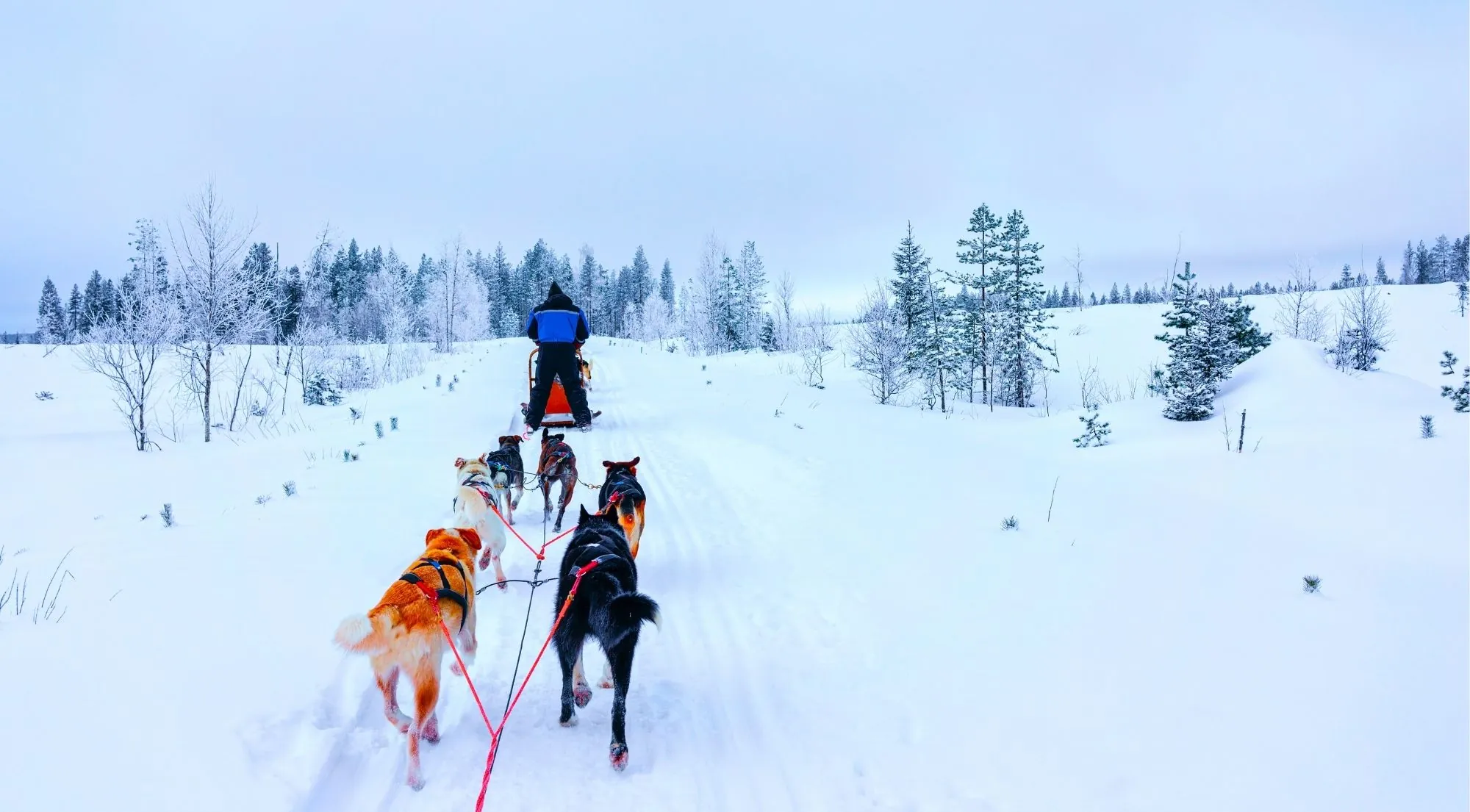
1. Husky sledding
Husky sledding sounds touristy until the dogs start running, and then it makes sense. A husky team moves remarkably fast through snowy forest, and a longer safari feels very different from the short rides offered near the big attractions. On the Rovaniemi: Apukka Husky Adventure 6km, self-driven (from €219, 4.6/5 from more than 1,500 reviews) you drive your own team for 6 km.
Tours vary a lot. Before you book, check:
- the time actually spent sledding
- the sledding distance
- whether guests drive
- whether two people share a sled
- the minimum age for children
- whether a kennel visit is included
- thermal clothing
- group size
- animal-welfare standards
Don’t assume a three-hour tour means three hours of sledding: transfers, dressing and instruction can take up much of the advertised time.
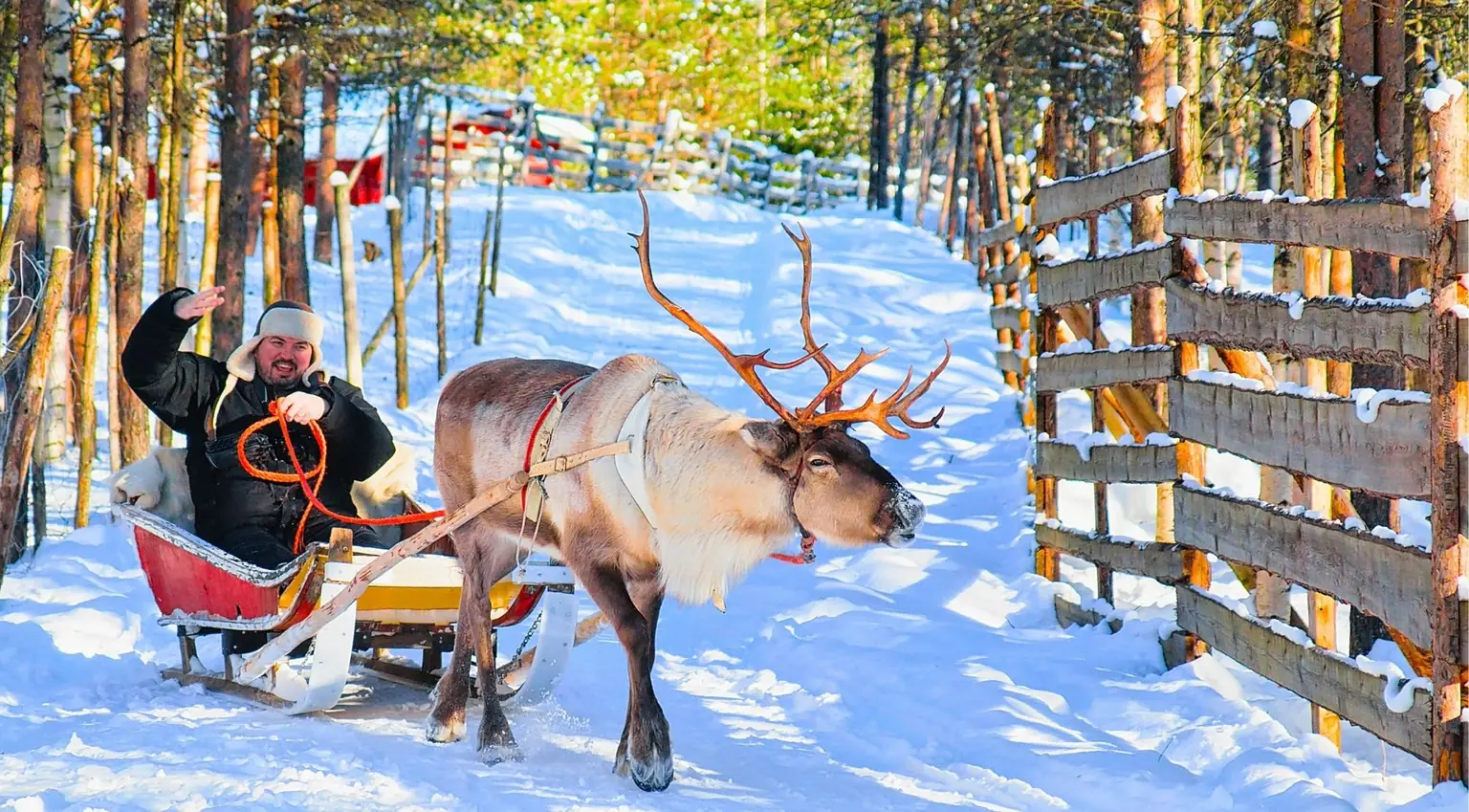
2. Reindeer sleigh rides
Reindeer are slower, and that is the point. A sleigh moving quietly through snowy woodland feels completely different from a husky safari. Short rides suit families and young children. Longer visits can include:
- feeding the reindeer
- meeting the herders
- learning about reindeer herding
- a meal around a fire
- a longer forest ride
Choose a trip that explains reindeer culture, not one that treats the animals as a five-minute photo stop. The Rovaniemi: 2km Reindeer Sled Ride Through the Forest (from €159, 4.8/5 from 275 reviews) is a longer forest ride at a farm. If you want huskies, reindeer and a snowmobile on one trip, the Rovaniemi: Husky & Reindeer Experience with Snowmobile Ride (from €198, 4.6/5 from more than 1,200 reviews) covers all three.
3. Snowmobiling
A snowmobile covers much more ground. A two- or three-hour safari can take you through forest, across frozen lakes and into country that is hard to reach on foot. Common options include:
- beginner snowmobile tours
- Northern Lights snowmobile trips
- family safaris
- full-day wilderness tours
- combinations with ice fishing
The Rovaniemi: Drive New 2025 Snowmobiles on Arctic Safari (from €119, 4.7/5 from more than 2,200 reviews) is a well-reviewed half-day option.
Before you book, check:
- the driving licence requirements
- the insurance excess
- age limits
- seating for children
- thermal clothing
- fuel and equipment
- how much driving is actually included
Young children usually ride in a sled pulled behind the guide’s snowmobile, not on a snowmobile themselves.
4. Cross-country skiing
If you want to see Lapland the way Finns do, try cross-country skiing. It is one of the region’s best winter activities and usually much cheaper than a motorised safari. The big resorts keep long trail networks, and you can rent:
- classic skis
- skate skis
- boots
- poles
Beginners should consider a lesson. Once you have the basic technique, cross-country skiing lets you explore snowy landscapes on your own. The Rovaniemi: Cross-Country Skiing Adventure with Guide (4.8/5 from 70 reviews) is a guided first outing near Rovaniemi.
5. Downhill skiing and snowboarding
Lapland has no Alpine mountains. It has fells, rounded hills, so the ski areas are smaller than the big resorts in France, Switzerland or Austria. They work well for families, beginners and anyone who wants to combine skiing with other Arctic activities. The main ski areas are:
- Levi
- Ylläs
- Pyhä
- Saariselkä
- Luosto
The main slopes usually run from about November to April, and some keep going later. If your holiday is mainly about downhill skiing, February to April gives you more daylight than December.
6. Snowshoeing
Snowshoeing is simple, quiet and surprisingly rewarding, and it is one of the easiest ways to get away from roads and busy attractions. Guided snowshoe trips often head into:
- forests
- national parks
- frozen wetlands
- fell landscapes
It takes much less technique than cross-country skiing. If you can walk, you can usually snowshoe. The Rovaniemi: Hiking and Snowshoeing Adventure in Lapland (4.4/5 from more than 800 reviews) is the most-reviewed guided snowshoe trip from Rovaniemi.
7. Northern Lights tours
Aurora tours come in two broad types.
Fixed-location tours take you to a camp, frozen lake or lodge to wait. They can be enjoyable even without the aurora, because they often include:
- a fire
- hot drinks
- food
- photography
- snowshoeing
Mobile aurora hunts drive in search of clearer skies. They usually suit you better when the Northern Lights are your priority. The Rovaniemi: Northern Lights Tour - 100% Guarantee & Photos (from €109, 4.8/5 from more than 2,700 reviews) is a mobile hunt that drives up to 200 km and offers a full refund if no aurora is captured.
Before you book, check:
- how far the tour may drive
- the maximum group size
- whether photos are included
- whether thermal clothing is supplied
- how flexible the return time is
Be wary of any operator promising a guaranteed display: nobody controls the solar activity or the cloud. Our Rovaniemi Northern Lights tour prices guide compares what the tours cost.
8. Ice fishing
Drill a hole through a frozen lake, lower a small lure into the water and wait. Ice fishing is one of Lapland’s simplest activities, and with a fire, a warm drink and a quiet Arctic landscape, that simplicity is the appeal. The Rovaniemi: Ice Fishing Experience (from €89, 4.5/5 from 421 reviews) includes the equipment and a guide. It combines well with:
- snowmobiling
- snowshoeing
- a wilderness lunch
9. Ice floating
For something stranger, try Arctic floating. You wear a sealed, insulated survival suit and float in icy water while your clothes underneath stay dry. It is closely supervised and usually happens in a prepared area. Once you realise the suit is doing the work, it feels more peaceful than adventurous.
From Rovaniemi, the From Rovaniemi: Icebreaker Arktis Cruise with Ice Floating (from €410, 4.4/5 from 401 reviews) combines a float with an icebreaker cruise in the Gulf of Bothnia. Browse more ice floating tours.
10. Sauna and ice swimming
Finnish sauna culture makes much more sense once you have spent a real winter day outside. After hours at -15°C, a sauna stops feeling like a spa treat and starts feeling essential. Some experiences combine it with:
- rolling in the snow
- ice swimming
- outdoor hot tubs
- lake plunges
Ice swimming is completely optional: a quiet sauna and ten seconds standing outside in the freezing air can be enough. If you want the full version, the Rovaniemi: Traditional Sauna and Ice Swimming Experience (from €80, 4.9/5 from 468 reviews) has a guide at the ice hole.
11. Walk through a snowy forest
This costs nothing, and you shouldn’t underestimate it. Not every memorable moment in Lapland needs an engine, dogs or an expensive tour. On a calm winter day, fresh snow absorbs sound so well that a forest can feel almost silent. If there is one thing to leave unbooked, it is a couple of hours just to walk.
Best places to experience winter in Lapland
Rovaniemi
Best for first-time visitors and families. Choose Rovaniemi for:
- Santa Claus Village
- easy flights
- a wide choice of tours
- restaurants
- museums
- short stays
- families
It is the most straightforward place in Lapland to get to and get around. The downside is that it feels like a small city, not a remote Arctic resort. Browse stays in Rovaniemi or read our Rovaniemi in winter guide for first-timers.
Levi
Best for skiing, nightlife and activities. Levi is one of Finland’s best-known ski resorts, and it works well if you want:
- downhill skiing
- restaurants
- bars
- huskies
- reindeer
- snowmobiling
- aurora trips
It is particularly handy for groups where some people want to ski and others don’t. Browse stays in Levi.
Ylläs
Best for skiing and wilderness. Ylläs feels more about nature than Levi and has access to an enormous cross-country ski network. Choose it for:
- skiing
- national park landscapes
- snowshoeing
- quieter evenings
- cabins
It is a strong choice for active travellers. Browse stays in Ylläs.
Saariselkä
Best for a compact Arctic resort. Saariselkä lies well north of Rovaniemi and offers:
- skiing
- snowmobiling
- husky tours
- aurora trips
- easy access to the wilderness
Because it is so far north, it feels especially Arctic in midwinter. Browse stays in Saariselkä.
Inari
Best for northern landscapes and Sámi culture. Inari feels very different from Rovaniemi. It lies in the Sámi Homeland, and you can learn about Sámi history and contemporary life at Siida, the Sámi Museum and Nature Centre.
If you join an experience sold around Sámi culture, choose one with a real connection to the Sámi community. The Sámi Parliament of Finland asks visitors and tourism businesses to avoid exploitative or inaccurate portrayals of Sámi culture and to respect the Sámi Homeland as a living cultural landscape, not just a tourist wilderness. Browse stays in Inari.
Kilpisjärvi
Best for dramatic wilderness. Kilpisjärvi lies in Finland’s far northwest, and the landscape is more mountainous and open than the forests around Rovaniemi. It suits travellers who want:
- remoteness
- snowmobiling
- skiing
- aurora watching
- Arctic wilderness
It is much less convenient for a short fly-in holiday. Browse stays in Kilpisjärvi.
Lapland winter daylight
Daylight changes more across the season than anything else, and it can shape your holiday even more than the temperature. In Rovaniemi:
- December: extremely short days, about 2.5 hours on average
- January: still dark, especially early in the month, improving to about 4 hours
- February: much more ordinary daylight, about 8 hours
- March: long bright days, about 12 hours
- April: very long days and strong sunshine, about 15 hours
That is why February and March are so practical: you can follow a normal daytime outdoor schedule and still have dark evenings.
What is polar night?
Polar night happens above the Arctic Circle when the sun stays below the horizon all day. In Finnish it is called kaamos, and it lasts longer the farther north you go. In Rovaniemi it is just the shortest day, 21 or 22 December; in the far north it lasts for weeks.
Polar night does not mean 24 hours of total darkness. Around midday the sky can glow blue, pink and orange for hours, and the snow reflects that light remarkably well. On a clear day, polar-night landscapes are some of the most photogenic in Lapland.
What should you wear in Lapland in winter?
The basic principle is layers. Our Lapland winter packing guide has the full list.
Base layer
Wear thermal underwear. Good choices include:
- merino wool
- technical synthetic fabrics
Avoid cotton on long outdoor trips.
Mid layer
Add insulation, such as:
- fleece
- a wool jumper
- insulated trousers
- a light down layer
In very cold weather, two insulating layers help.
Outer layer
Wear a windproof winter shell or insulated jacket and winter trousers. For active skiing you may want less insulation; for standing still on an aurora tour, much more.
Feet
Use properly insulated winter boots. The sole matters: thin-soled fashion boots are not enough in deep winter. Wear warm wool or technical socks, but leave room in the boot for air. Overstuffed tight boots make your feet colder.
Hands
Mittens are generally warmer than gloves. A useful combination is:
- thin liner gloves
- insulated mittens
That lets you use a camera briefly without baring your skin.
Head and face
Bring:
- a warm hat
- a neck gaiter
- a scarf
- a balaclava for extreme cold
At -20°C or below, exposed cheeks get uncomfortable very quickly.
Do tours provide thermal clothing?
Many do. Husky, reindeer, snowmobile and Northern Lights operators often provide some mix of:
- a thermal overall
- winter boots
- wool socks
- mittens
- a balaclava
It is not universal, so always check what is included. Even when you get a thermal suit, arrive in proper layers underneath.
Can children cope with Lapland winter?
Yes, if the adults plan around the cold. The problem is usually not the temperature alone but how long children spend in it. A toddler may be perfectly happy outside for 30 minutes and miserable after two hours.
Children also move less during:
- reindeer rides
- husky sled rides
- aurora watching
- snowmobile sled rides
Those are exactly the times they get cold fastest. Instead of booking three long outdoor tours in one day, alternate: an outdoor activity, a warm indoor lunch, an indoor attraction, then a short outdoor activity. A slower schedule usually makes a better family holiday. Our Rovaniemi with kids guide has more ideas.
Winter driving in Lapland
Driving in Lapland in winter is normal for locals, but the roads need different habits. Expect:
- compacted snow
- ice
- little daylight
- snowbanks
- reduced visibility
- reindeer near the road
Finland requires winter tyres from 1 November to 31 March when the weather or road conditions call for them (Traficom). Local rental cars should be properly equipped, but check when you book.
Do you need a rental car?
In Rovaniemi: probably not for a short trip. Many tours include hotel pickup or meet at central points, and Santa Claus Village is easy to reach.
At the ski resorts: possibly not. Levi and Saariselkä are compact enough that many visitors manage without a car.
In a remote cabin: a car is much more useful, particularly if you want to:
- cook for yourself
- look for the aurora on your own
- visit several places
- stay outside a resort
- reach trailheads
If you have never driven on snow, keep your first journeys short and avoid long night drives.
Reindeer on the road
You can meet reindeer almost anywhere in Lapland, and they do not behave like careful pedestrians. Slow down as soon as you see one, and don’t assume an animal standing by the road will stay there. This matters most after dark, when you can see much less.
Are frozen lakes safe?
Not automatically. A lake that looks frozen is not necessarily safe to walk on. The ice thickness varies with:
- currents
- springs
- the weather
- snow cover
- river mouths
- changing temperatures
Stick to official routes or follow local advice, and never take footprints or snowmobile tracks as proof that the ice will hold. Northern lakes usually freeze between late October and December, but the timing and conditions vary.
How many days do you need for a winter Lapland trip?
2 nights
Possible, but very rushed: you spend much of the trip travelling.
3 nights
Enough for:
- one big safari
- Santa or skiing
- one or two aurora chances
4 nights
The best minimum for most first-time visitors, with time for:
- huskies
- reindeer
- the aurora
- snowmobiling
- some unplanned winter time
5–7 nights
Better for:
- skiing
- several Northern Lights attempts
- families
- slower travel
- combining places
The extra room for bad weather alone makes a longer stay worthwhile.
A 5-day winter itinerary
Day 1: arrive and settle in
Collect any winter clothing, explore your resort and use the sauna. If the sky is clear, make your first aurora attempt.
Day 2: huskies
Take a proper husky safari. Choose a longer forest route over the shortest introductory ride, and keep the afternoon relaxed.
Day 3: reindeer and the Northern Lights
Visit a reindeer farm, learn about reindeer herding and take a sleigh ride. In the evening, join a mobile aurora tour if the forecast looks promising.
Day 4: a snow day out
Choose one:
- a snowmobile safari
- cross-country skiing
- downhill skiing
- snowshoeing
Finish with a sauna.
Day 5: slow Lapland
Do less. Walk through the forest, go sledging, drink coffee somewhere warm and take photographs. Winter Lapland is much more enjoyable when every minute is not scheduled.
How expensive is Lapland in winter?
It can be very expensive. The three biggest costs are usually:
- accommodation
- flights
- organised activities
A family booking private husky, reindeer, snowmobile and Northern Lights tours can easily spend more on activities than on accommodation. Christmas is usually the most expensive time; January, February and March can be better value, depending on school holidays and demand at the resorts.
Where to spend your money
Put your budget into experiences that are hard to recreate on your own.
Worth paying for:
- a proper husky safari
- a good reindeer experience
- a snowmobile safari
- a knowledgeable aurora guide, if the aurora matters to you
Easy to do cheaply or on your own:
- winter walks
- sledging
- the sauna at your accommodation
- cross-country ski rental
- snowshoe rental
- photography on your own
- watching for the Northern Lights from your cabin
You don’t need to turn every day into a €500 excursion.
Do you need a glass igloo?
No. Glass igloos look spectacular, they are usually expensive, and staying in one does not make the Northern Lights appear. A glass-roofed cabin is a good choice if:
- the accommodation is part of the experience for you
- you have the budget
- the location has properly dark skies
- the room is comfortable even without the aurora
It makes less sense if you are booking it only because you expect to watch the Northern Lights from bed. Nothing guarantees them.
Is a winter Lapland trip worth it without the Northern Lights?
Yes. Treat the aurora as a possible highlight, not the thing your whole trip depends on. Even with no Northern Lights, you still have:
- snowy forests
- huskies
- reindeer
- skiing
- snowmobiling
- frozen landscapes
- Arctic light
- the sauna
- very quiet nature
A good Lapland itinerary works even if cloud covers the sky every night.
Visiting the Sámi Homeland responsibly
Northern Lapland is not an empty wilderness. Parts of northern Finland form the Sámi Homeland, including Inari, Utsjoki, Enontekiö and the northern part of Sodankylä. The Sámi Parliament stresses that these landscapes are places of everyday life, cultural importance and traditional livelihoods.
If you want to learn about Sámi culture:
- choose Sámi-led or properly connected experiences
- avoid stereotyped “tribal” entertainment
- do not treat traditional clothing as a costume
- respect private property and local communities
- follow marked routes and visitor guidance
The Siida Sámi Museum in Inari is a good place to start.
Winter Lapland vs Christmas Lapland
These are two different holidays.
A Christmas trip to Lapland is about:
- Santa
- festive meals
- Christmas decorations
- children
- December travel
A winter trip is about:
- snow
- Arctic nature
- skiing
- huskies
- reindeer
- the aurora
- snowmobiling
If you have no interest in Santa, you don’t need to go in December. February or March may suit you much better.
Lapland winter vs Iceland winter
The two are often compared because both have the Northern Lights, but the winter trips are quite different. Lapland usually has more reliable deep snow and purpose-built Arctic activities such as:
- huskies
- reindeer
- cross-country skiing
- snowmobiling
Iceland is more about:
- waterfalls
- geothermal landscapes
- glaciers
- coastal scenery
- road trips
Choose on the landscape and the activities, not only the aurora.
Is Lapland in winter hard for first-time Arctic travellers?
Less than you might expect. The tourism set-up is excellent: roads stay open, the airports are used to snow, hotels are warm and tour operators lend specialist clothing. Finnish airports and road crews deal with snow every winter with de-icing, weather monitoring and large-scale snow clearing.
The Arctic is real, but you are not being dropped into an expedition. You just need to respect the weather.
Mistakes to avoid on a winter trip
Booking too many activities
Three safaris a day sounds efficient and usually ends up exhausting.
Buying fashionable boots instead of functional ones
Cold feet can ruin an otherwise excellent day.
Expecting guaranteed Northern Lights
No operator controls the sky.
Staying only two nights
A couple of cloudy nights can wipe out your whole aurora window.
Going in December because you think winter ends afterwards
January to March can be just as snowy, and often better for outdoor activities.
Underestimating March
March is still proper winter in Lapland, and for outdoor activities often a better one.
Assuming every “Sámi experience” is authentic
Look at who runs it and how the culture is presented.
Walking onto unfamiliar frozen water
Never judge ice safety by eye.
Lapland winter FAQ
When is winter in Lapland?
The snow usually settles in November, and the main winter season for visitors runs from December to March. Snow often lasts into April, and farther north into May.
What are the coldest months in Lapland?
January and February are generally the coldest. In Rovaniemi, Visit Rovaniemi gives an average of -30°C to -15°C in January and -20°C to -15°C in February, although severe cold can come at any point in the winter.
How cold is Rovaniemi in winter?
Visit Rovaniemi gives average ranges of -20°C to -10°C in December, -30°C to -15°C in January, -20°C to -15°C in February and -15°C to -5°C in March, with colder spells possible (Visit Rovaniemi).
When is snow guaranteed in Lapland?
Snow is never strictly guaranteed, but January to March is far more reliable than autumn or very early winter.
Is February a good time for Lapland?
Yes. February has established snow, more daylight than December and January (about 8 hours in Rovaniemi) and good Northern Lights chances.
Is March too late for Lapland?
No. March is one of the best months for skiing, snowshoeing and other outdoor activities: the snow is still everywhere and there are about 12 hours of daylight.
Can you see the Northern Lights in winter?
Yes. Lapland’s aurora season runs from late August to early April, and Visit Finland names February and March among the most active periods.
Is December or February better?
Choose December for Christmas and Santa, and February for a better balance of snow, daylight and Northern Lights.
Is January too cold for Lapland?
Not necessarily, but cold spells below -20°C are common. Good clothing and shorter outdoor sessions make the difference.
Can you ski in Lapland in winter?
Yes. Lapland’s ski season usually runs from November to April, and some resorts stay open later.
Can you visit Lapland without renting a car?
Yes, particularly in Rovaniemi and compact resorts such as Levi and Saariselkä. Many trips include transfers.
How long should you spend in Lapland?
Four nights is a good minimum for a first trip. Five to seven nights gives you more room for the weather, skiing and Northern Lights attempts.
Choosing your winter month
Winter is the season that defines Finnish Lapland, but December is not automatically the best time to go.
December gives you Christmas lights, Santa and Arctic twilight. January gives you deep cold, long nights and a quieter winter. February is the best compromise for many people: reliable snow, dark evenings and more useful daylight. March changes the mood completely: the snow stays, the sunlight floods back, the ski trails fill and you can spend full days outdoors before looking for the Northern Lights at night.
If you are not travelling specifically for Christmas, look hardest at February and March. You get almost everything people picture when they think of winter in Lapland, deep snow, huskies, reindeer, frozen forests, skiing and dark aurora nights, without spending most of your waking hours in the dark. Check activity start dates with the operators before you book, because they depend on the snow each year.