For the strongest aurora odds, go north. For the easiest trip, choose Rovaniemi. For the best balance of dark skies, wilderness and tourist infrastructure, Saariselkä and Inari are hard to beat.
Finnish Lapland sits beneath the auroral zone, and the Northern Lights can be visible on dark, clear nights from late August to early April. In the far north, auroras can occur on as many as three out of four clear nights, according to tourism information based on Finnish Meteorological Institute data. (source: Visit Finland)
But latitude isn’t everything. Cloud cover, light pollution and how many nights you stay matter enormously. A clear night near Rovaniemi can be far better than a cloudy night hundreds of kilometres farther north.
Quick answer
- Best overall for an aurora-focused trip: Saariselkä / Inari
- Best for first-time visitors: Rovaniemi
- Best combination of skiing + Northern Lights: Levi or Ylläs
- Best for remote Arctic wilderness: Utsjoki
- Best dramatic landscape: Kilpisjärvi
- Best for seeing auroras without travelling far from your accommodation: Saariselkä, Inari or an aurora resort outside Rovaniemi
The biggest mistake: choosing a destination because somebody promises “guaranteed Northern Lights.” No location can guarantee an aurora. You need darkness, sufficient geomagnetic activity and — most importantly — a break in the clouds.
Where is the best place to see the Northern Lights in Lapland?
There isn’t one universally best place.
If seeing the Northern Lights is the main reason for your trip, we would lean toward Inari or Saariselkä in northern Lapland. They are considerably farther north than Rovaniemi, surrounded by dark wilderness and easily reached via Ivalo Airport.
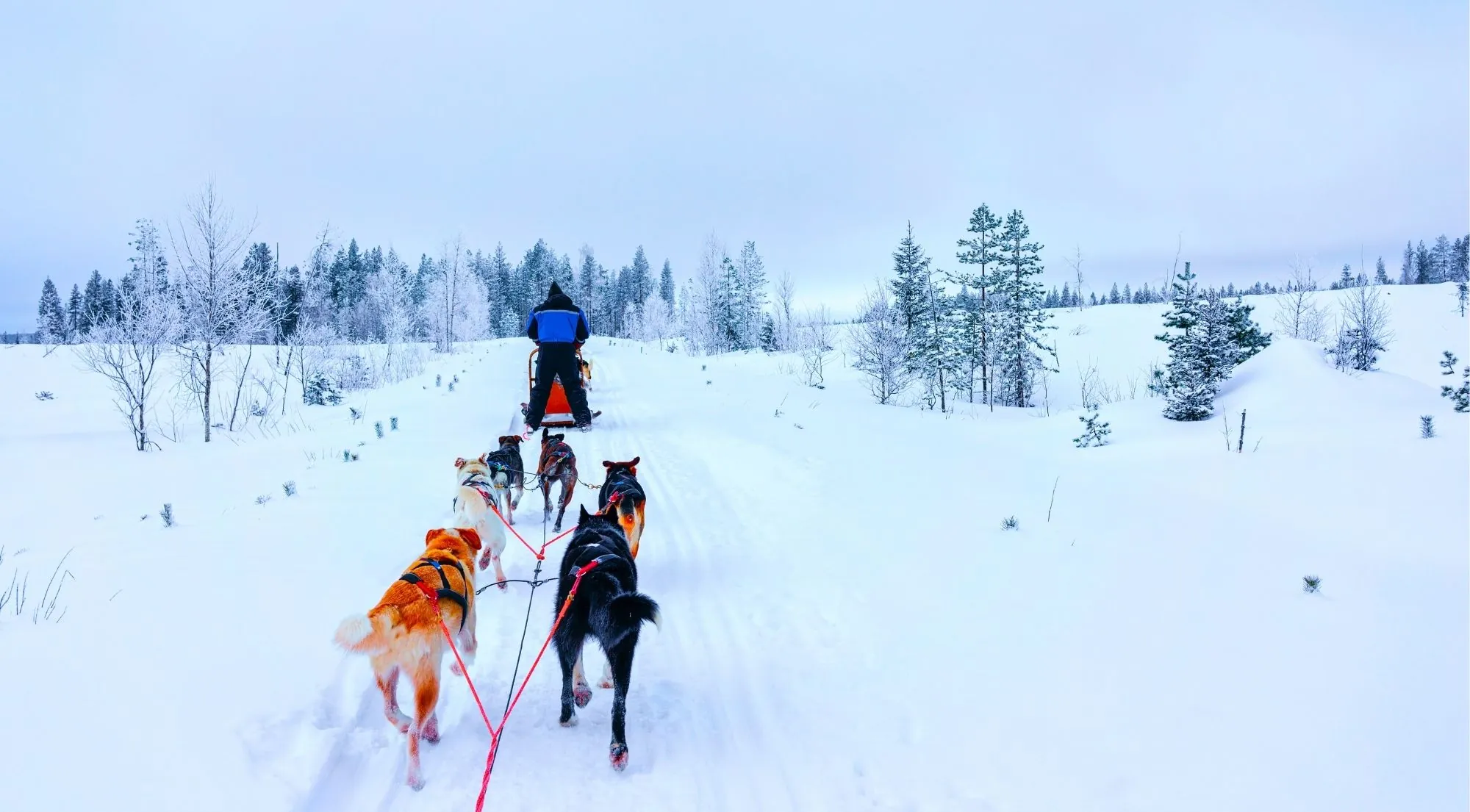
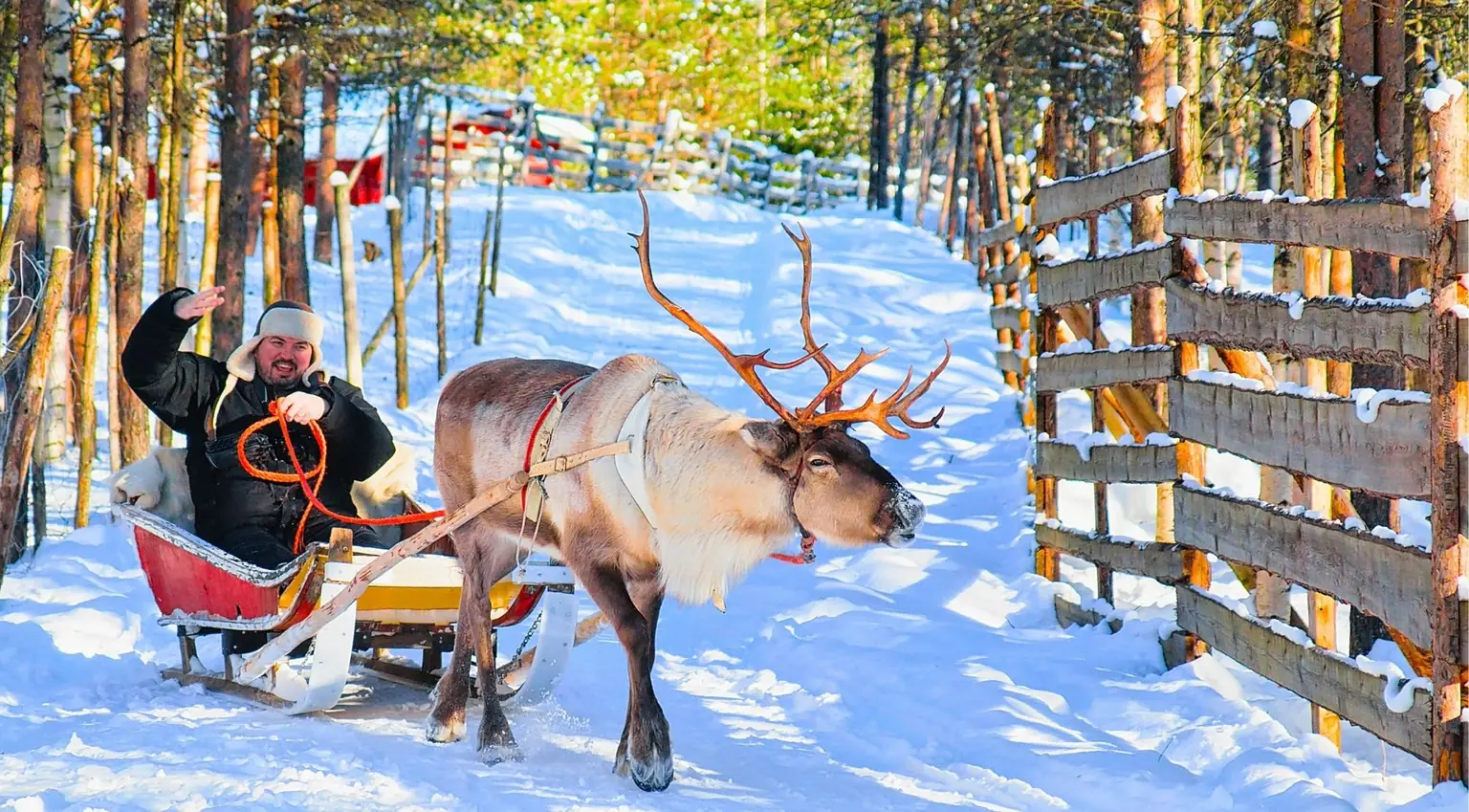
If you want a broader Lapland holiday — Santa Claus Village, huskies, reindeer, snowmobiles and restaurants as well as aurora hunting — Rovaniemi is much easier.
And if your idea of Lapland involves skiing during the day and watching the sky at night, Levi and Ylläs are better-balanced choices.
| Destination | Best for | Aurora environment | Accessibility | Main drawback |
|---|---|---|---|---|
| Inari | Serious aurora trips | Excellent, very dark | Fly to Ivalo + transfer | Fewer big-resort attractions |
| Saariselkä | Best all-round aurora base | Excellent | Fly to Ivalo + short transfer | Small resort |
| Rovaniemi | First trips & families | Very good outside city | Excellent | More artificial light |
| Levi | Skiing + aurora | Very good | Easy via Kittilä Airport | Resort lighting |
| Ylläs | Quiet skiing + dark skies | Excellent | Via Kittilä Airport | More spread out |
| Utsjoki | Maximum remoteness | Exceptional | Long journey | Limited services |
| Kilpisjärvi | Mountains & photography | Exceptional | More complicated | Remote |
1. Inari — best for a serious Northern Lights trip
Best for: travellers prioritising the aurora above almost everything else
If someone told us, “I’m travelling to Finland primarily because I want to see the Northern Lights,” Inari would be near the top of our shortlist.
Inari is deep in northern Finnish Lapland, well beyond the Arctic Circle. Artificial light drops away quickly outside the village, while enormous Lake Inari creates the kind of broad northern horizon aurora watchers want.
Visit Finland says that while auroras occur on roughly every second clear night around much of Lapland, the frequency can reach around three nights out of four in northernmost Lapland when skies are clear. (source: Visit Finland)
That distinction matters. You are not guaranteed better weather merely because you travel north, but geographically you are placing yourself very comfortably beneath the auroral zone.
Why choose Inari?
You get:
- very little light pollution
- enormous open skies
- Lake Inari as a dramatic foreground
- excellent access to remote aurora locations
- considerably less of a city feel than Rovaniemi
- easy combination with Sámi cultural experiences
- aurora cabins and wilderness hotels around the wider Inari region
The area is also one of the most meaningful places to learn about Sámi culture, including at Siida in Inari. The Sámi are the Indigenous people of Sápmi, which extends across northern parts of Finland, Sweden, Norway and Russia. (source: Visit Finland)
The trade-off
Inari is not the place we’d choose for travellers who want dozens of restaurants, big shopping areas or a large ski resort.
It works best when the landscape itself is the attraction.
2. Saariselkä — perhaps the best all-round aurora base
Best for: strong aurora potential without giving up comfort and activities
Saariselkä may be the sweet spot.
You are far enough north for excellent aurora potential, yet the village has plenty of accommodation, restaurants, winter activities and organised excursions.
It is surrounded by fell country and wilderness associated with Urho Kekkonen National Park, while nearby Ivalo Airport makes reaching this part of Lapland relatively straightforward.
Visit Finland specifically highlights Saariselkä, Utsjoki and Kilpisjärvi among Finland’s remote destinations with dark skies and unobstructed aurora viewing. (source: Visit Finland)
Why Saariselkä works so well
Unlike a larger city, you don’t necessarily need a long drive before the sky becomes dark.
Walk or transfer away from the brightest village lights and you can quickly reach:
- open fell landscapes
- forests
- wilderness trails
- purpose-built aurora accommodation
Lapland North also operates webcams around Saariselkä, including the fell landscape at Kaunispää, which can be useful for checking real-time sky and weather conditions. (source: Lapland North Destinations)
Saariselkä vs Inari
Choose Saariselkä if you want:
- a compact holiday resort
- skiing
- husky rides
- snowmobiles
- restaurants
- aurora excursions
Choose Inari if you want:
- greater quiet
- Lake Inari scenery
- Sámi culture
- a more wilderness-oriented stay
For many first-time aurora travellers, Saariselkä is the easier compromise.
3. Rovaniemi — best for first-time visitors
Best for: families, short trips and travellers wanting the full Lapland experience
Rovaniemi is not the darkest place on this list.
It may still be the most practical place to see the Northern Lights in Lapland.
That distinction is important.
Rovaniemi combines:
- an airport
- railway connections
- large numbers of hotels
- Santa Claus Village
- restaurants
- husky and reindeer excursions
- snowmobiling
- numerous Northern Lights tours
And despite being Lapland’s regional capital, proper darkness is surprisingly close.
Visit Rovaniemi says the local Northern Lights season typically runs from late August until early April, and viewing locations range from surrounding wilderness to places close to the city itself. (source: Visit Rovaniemi)
Is Rovaniemi too bright for the Northern Lights?
No.
City-centre lights are certainly not ideal, particularly for a weak aurora. But you do not have to travel far before the sky becomes much darker.
Visit Finland notes that even around Rovaniemi, heading a short distance away from urban lighting toward open areas can make a considerable difference. (source: Visit Finland)
This is exactly why mobile Northern Lights tours make sense here. Our guide to Rovaniemi Northern Lights tour prices compares what each type costs, and the Northern Lights tours page lists the ones we feature.
Instead of standing outside your hotel and hoping, guides can drive beyond the illuminated areas — and, depending on the tour, potentially search for clearer skies.
Who should pick Rovaniemi?
We’d choose it if you have only 3–4 nights and want several reasons to enjoy the trip even if the aurora doesn’t cooperate.
That might include:
- Santa Claus Village
- husky sledding
- reindeer rides
- snowmobiling
- Arctic museums
- winter restaurants
- sauna
- family activities
This matters because the Northern Lights are never guaranteed.
A good aurora destination should still make a good holiday when the sky stays cloudy.
4. Ylläs — one of Lapland’s strongest combinations of darkness and activities
Best for: quiet resort atmosphere, skiing and easy self-guided aurora watching
Ylläs deserves more attention from international aurora travellers.
The destination’s official tourism organisation says the Northern Lights may statistically be visible on around two out of three nights when conditions allow, with aurora season extending from late August into spring. (source: Yllas.fi)
More importantly, Ylläs has several readily accessible open viewing areas.
Suggested spots include:
- Lake Äkäslompolo
- Lake Ylläsjärvi
- viewpoints around the fells
- the area around Yllästunturi Visitor Centre Kellokas
- darker roadside viewing locations
The official Ylläs guide particularly recommends places with wide, unobstructed views toward the northern sky. (source: Yllas.fi)
What makes Ylläs special?
You get less city light than Rovaniemi while retaining a major winter activity scene.
There is also another advantage: landscape.
A good Northern Lights photo isn’t just about the aurora. A dark green arc above:
- snow-covered spruce trees
- a frozen lake
- a fell
- a small wilderness hut
often looks far more evocative than the same aurora above a road or hotel car park.
Ylläs gives you those foregrounds almost everywhere.
5. Levi — best for Northern Lights plus a lively ski holiday
Best for: travellers who want skiing, restaurants and nightlife as well as auroras
Levi is one of Finland’s best-known winter resorts.
During the day you have skiing, restaurants and resort activities. At night, you can quickly leave the main illuminated area and search for darker skies.
The official Levi tourism organisation publishes an aurora map with designated viewing locations, including areas around Lake Immeljärvi, the fell and darker roadside viewpoints. (source: Levi)
That makes Levi particularly convenient for travellers who want to attempt some independent aurora watching.
The downside
The centre of Levi is brighter than a remote wilderness lodge.
For strong displays this is not necessarily a deal-breaker. For weak auroras, however, moving away from artificial light significantly improves what you can see.
If the Northern Lights are your only priority, we’d push farther north toward Saariselkä or Inari.
If you want:
ski all day → nice dinner → Northern Lights tour at night
Levi is an excellent fit.
6. Utsjoki — best for going very far north
Best for: experienced independent travellers and wilderness lovers
If your instinct is to go as far north as reasonably possible, look at Utsjoki.
It is Finland’s northernmost municipality and belongs to the wider northern Lapland region along with Inari and Saariselkä.
Up here, settlements are small and darkness dominates.
Visit Finland specifically identifies Utsjoki among the remote northern destinations offering superb dark-sky conditions. (source: Visit Finland)
Why not recommend it to everybody?
Because better geographic positioning doesn’t automatically make a better holiday.
Compared with Rovaniemi or Levi:
- transfers take longer
- accommodation choice is smaller
- fewer tours run
- restaurants and services are limited
- winter driving can be more demanding
For the right traveller, those are advantages.
For a family making its first trip to Lapland, they may be complications.
7. Kilpisjärvi — best scenery for aurora photography
Best for: photographers, road trips and travellers wanting Arctic mountain landscapes
Finnish Lapland is often associated with forests and gently rounded fells.
Kilpisjärvi feels different.
You’re in the far northwestern arm of Finland, close to Sweden and Norway, with Saana Fell dominating the landscape.
Visit Finland describes Kilpisjärvi as one of Finland’s standout places for spotting the Northern Lights from early autumn into spring when the sky is dark and clear. (source: Visit Finland)
Why photographers love it
Foreground matters.
An aurora photograph becomes much stronger when the sky is paired with:
- Saana Fell
- frozen lakes
- mountain silhouettes
- snow-covered wilderness
Kilpisjärvi supplies these naturally.
The catch
It requires more effort to reach than Rovaniemi, Levi or Saariselkä.
For a one-week Arctic road trip, fantastic.
For a two-night Lapland stopover, probably not.
Rovaniemi vs Saariselkä vs Inari for Northern Lights
This is probably the most useful comparison for first-time visitors. For the rest of each base (skiing, Santa, Sámi culture and flights), see our complete Lapland travel guide.
| Rovaniemi | Saariselkä | Inari | |
|---|---|---|---|
| Latitude | Arctic Circle | Farther north | Farther north |
| Light pollution | Highest | Low | Very low |
| Aurora tours | Huge choice | Excellent choice | Good choice |
| Airport access | Excellent | Via Ivalo | Via Ivalo |
| Santa experience | Excellent | Limited | Limited |
| Skiing | Moderate | Good | Limited |
| Wilderness feel | Moderate | Excellent | Excellent |
| Restaurants/services | Excellent | Good | Moderate |
| Best for | First Lapland holiday | Aurora + activities | Aurora-focused holiday |
Our practical way to choose
Choose Rovaniemi when the Northern Lights are one item on a bigger Lapland wish list.
Choose Saariselkä when the Northern Lights are one of the two or three main reasons for travelling.
Choose Inari when seeing the Arctic sky is the central theme of your holiday.
Does travelling farther north really improve your chances?
Generally, yes — but don’t oversimplify it.
The Northern Lights most commonly occur within a broad ring around Earth’s magnetic pole known as the auroral oval.
Northern Lapland sits very favourably beneath this zone.
Visit Finland says auroras may appear on roughly every second clear night across Lapland, rising to as many as three nights out of four in northernmost Lapland. (source: Visit Finland)
But there is a much more immediate problem:
Clouds.
Imagine this:
Inari: perfect aurora activity, 100% cloud cover
Rovaniemi: moderate aurora activity, completely clear sky
You would rather be in Rovaniemi.
Cloud cover can block the Northern Lights completely. That’s why checking ordinary weather forecasts can be just as important as checking geomagnetic data. Visit Finland explicitly identifies clear skies as one of the principal requirements for successful aurora viewing. (source: Visit Finland)
The real secret: stay longer
Travellers often obsess over finding the perfect village.
We’d pay almost as much attention to how many nights you have.
One night gives nature one opportunity.
Four nights give you four.
Seven nights let several weather systems pass through.
This is why we’d usually rather spend four nights in Saariselkä than race through three Lapland towns spending only one night in each.
Changing hotel doesn’t create clear skies.
Time does.
How many nights should you stay to see the Northern Lights?
There is no guaranteed number.
As a planning rule:
1 night
A gamble.
2 nights
Better, but still vulnerable to one cloudy weather system.
3–4 nights
A much more sensible minimum for an aurora-focused trip.
5–7 nights
Better still, particularly if seeing the Northern Lights is a major bucket-list goal.
The reason isn’t that auroras follow a weekly schedule. They don’t.
You are giving yourself more combinations of:
darkness + clear sky + geomagnetic activity.
What months are best?
Our month-by-month guide to the best time to see the Northern Lights covers this in detail. In short:
The broad Northern Lights season in Finnish Lapland runs from approximately late August to early April. (source: Visit Finland)
Each period feels very different.
September
Excellent if you want:
- relatively mild temperatures
- autumn colours
- unfrozen lakes
- aurora reflections on water
- fewer Christmas crowds
Ylläs, for example, promotes late August onward as the beginning of its aurora season. (source: Yllas.fi)
October
Darkness increases quickly.
Potentially excellent for Northern Lights, although snow conditions can be transitional.
November
Long nights and increasing chances of proper winter scenery.
Not every year has identical snow cover, so don’t assume early November will look like Christmas-card Lapland.
December
Wonderful atmosphere and very long nights.
Also:
- peak Christmas demand
- expensive accommodation
- large visitor numbers in destinations such as Rovaniemi
Come because you want Christmas Lapland plus auroras, not because December magically guarantees stronger auroras.
January
Extremely dark and often very cold.
Excellent for deep-winter atmosphere.
February
One of our favourite combinations.
You still get:
- extensive darkness
- deep snow
- long aurora windows
but gradually increasing daylight makes daytime activities more enjoyable.
March
Arguably one of the smartest months.
Visit Finland notes that September–October and February–March coincide with particularly active aurora periods around the equinox seasons. (source: Visit Finland)
You also get more daylight and often less brutal temperatures than midwinter.
Early April
Still possible in Lapland as long as nights remain dark enough, but the viewing window becomes shorter as spring progresses.
Best places to watch once you’re there
The ideal aurora viewing spot has four characteristics:
- dark
- open
- safe
- easy enough to reach that you’ll actually use it
Good options include:
- open lake shores
- safely accessible frozen lakes
- fell viewpoints
- fields
- large clearings
- wilderness cabins
- remote roads with proper parking areas
Visit Finland recommends open locations such as frozen lakes and fell tops because they provide broad views of the sky. (source: Visit Finland)
Important safety warning about frozen lakes
Do not assume a lake is safe simply because it looks frozen.
Ice thickness varies dramatically near:
- river mouths
- currents
- bridges
- springs
- drainage channels
Levi’s official aurora map specifically warns visitors about areas of weak ice and recommends using officially opened trails. (source: Levi)
If you’re unsure, stay on marked routes or go with a local guide.
Do you need a Northern Lights tour?
No.
But for many first-time visitors, we recommend booking at least one mobile aurora tour.
A tour is particularly useful if:
- you don’t have a rental car
- you’ve never driven in Arctic winter conditions
- cloud cover is patchy
- you want photography help
- you want access to remote viewing areas
- you don’t know how to interpret forecasts
- temperatures are extremely low
Visit Finland points out that guides can take visitors away from light pollution and use local knowledge to search for better viewing conditions. (source: Visit Finland)
You may not need one if:
- you’re staying at a remote wilderness lodge
- your cabin already has a wide dark-sky view
- you have safe transport
- conditions are completely clear
- you’re comfortable monitoring the sky yourself
The Northern Lights do not care whether you’ve bought a tour ticket.
You’re paying for mobility, knowledge, logistics and comfort, not for the aurora itself.
What type of Northern Lights tour should you book?
Not every aurora excursion is an aurora-hunting excursion.
This distinction is surprisingly important.
Fixed-location camp tour
Usually involves:
- transport to a dark location
- campfire
- hot drink
- storytelling
- waiting for the aurora
Best for: Families and people wanting a relaxed Arctic evening.
Weakness:
If clouds move in, you may stay under them.
Mobile aurora chase
Usually involves travelling by minibus or car while guides monitor weather and sky conditions. In Rovaniemi, Rovaniemi: Northern Lights Tour – 100% Guarantee & Photos drives up to 200 km to find clear sky (4.8/5 from more than 2,700 reviews).
Best for: Travellers whose priority is maximising the opportunity to see the Northern Lights.
Weakness:
Potentially long night and lots of driving.
Photography tour
Typically smaller groups with more help setting up cameras. Rovaniemi: Aurora Hunt – Free Photos, 100% Guaranteed includes free photos of you under the lights (4.8/5 from more than 1,300 reviews).
Best for: People who care about getting a strong photograph, not merely a phone snapshot.
Snowmobile or snowshoe aurora safari
The journey itself is part of the experience.
Best for: Anyone who would enjoy the activity even if the aurora doesn’t appear.
That is a useful test for choosing a tour. See our snowmobile safaris for the Rovaniemi options, and our full comparison of Northern Lights tours in Lapland.
What time do the Northern Lights appear?
There is no fixed aurora appointment.
They can appear:
- early evening
- around midnight
- in the small hours
Local tourism advice in Ylläs notes that the hours around midnight and the period before it can be particularly productive, but aurora timing varies from night to night. (source: Yllas.fi)
The important lesson is:
Don’t go outside for five minutes, see nothing and give up.
An apparently empty sky can change rapidly.
Don’t rely on the KP index alone
Aurora apps often emphasise the KP index, a global measure of geomagnetic disturbance from 0 to 9.
It’s useful.
It isn’t the whole story.
In northern Lapland, you can see auroras even when KP values are relatively low because you’re already positioned underneath the auroral zone. Visit Finland notes that KP 1–2 can be sufficient in northern Lapland. (source: Visit Finland)
So pay attention to:
- cloud cover
- actual local sky conditions
- auroral oval position
- live cameras
- local forecasts
If the forecast app looks mediocre but the sky is crystal clear, go outside anyway.
Can you see the Northern Lights with the naked eye?
Yes.
But they do not always look like the heavily saturated photos you see online.
A weak aurora may initially resemble:
- pale mist
- a grey-white arc
- a faint greenish haze
Your phone or camera may detect colour more strongly than your eyes because its sensor can gather light over a longer exposure.
Ylläs tourism even recommends using a camera to check suspicious faint glows because cameras can detect weak auroras more easily than human vision. (source: Yllas.fi)
When activity intensifies, however, the difference can be dramatic.
Strong auroras can visibly:
- ripple
- twist
- pulse
- form curtains
- race across the sky
That’s the show everyone comes hoping for.
Can you see the Northern Lights from a glass igloo?
Yes — if several things cooperate.
You need:
- aurora activity
- clear sky
- a useful view from your cabin
- limited nearby artificial lighting
Finnish Lapland has a large number of glass-roofed cabins specifically designed for watching the sky. Visit Finland lists aurora accommodation from Rovaniemi northward, including options around Saariselkä. (source: Visit Finland)
But don’t misunderstand what you’re buying.
A glass igloo doesn’t increase aurora activity.
It increases the chance that you will notice an aurora because you’re able to keep watching the sky comfortably instead of standing outside at -20°C.
That can be surprisingly valuable. Near Rovaniemi, Rovaniemi: Aurora Igloo Private Lappish Dinner Experience lets you try a glass igloo for an evening, with a three-course dinner (4.8/5 from 42 reviews).
How cold will Northern Lights watching be?
Potentially very cold.
You’re often doing something worse than hiking in winter:
standing still.
Your body generates far less heat while waiting for the sky.
Wear:
- thermal base layer
- insulating mid-layer
- winter jacket
- insulated trousers
- proper winter boots
- thick socks
- warm gloves or mittens
- hat
- neck warmer
At very low temperatures, ordinary fashion boots and thin gloves won’t cut it.
Many organised winter tours provide thermal overalls and boots, but confirm what is included before booking. Our Lapland winter packing guide has the full list.
Best Lapland destination by traveller type
“I just want the strongest realistic chance of seeing the aurora.”
Look at:
Inari → Saariselkä → Utsjoki
“It’s our first family trip to Lapland.”
Choose:
Rovaniemi
You have plenty to do if the sky doesn’t cooperate.
“We want skiing as well.”
Choose:
Levi → Ylläs → Saariselkä
“I want amazing Northern Lights photographs.”
Consider:
Kilpisjärvi → Inari → Ylläs
“We don’t want to rent a car.”
Choose:
Rovaniemi → Saariselkä → Levi
All have substantial organised tour infrastructure.
“We want peace, wilderness and very few city lights.”
Choose:
Inari → Utsjoki → Kilpisjärvi
How we would plan a Northern Lights trip
If the aurora were one of our main reasons for flying to Lapland, we’d use a simple strategy.
Stay at least four nights
More nights usually help more than constantly changing destination.
Pick a northern base
Saariselkä or Inari would be particularly strong choices.
Stay somewhere with a dark outdoor viewing area
Being able to walk outside and look up repeatedly is enormously useful.
Book one serious aurora chase early in the trip
If you see a brilliant show immediately, fantastic.
If not, you still have later nights available.
Keep subsequent evenings flexible
Don’t schedule an elaborate three-hour dinner for the one perfectly clear night.
Watch cloud forecasts
Cloud is often the decisive variable.
Go outside repeatedly
Even strong auroras may arrive after hours of inactivity.
Which destination would we choose?
For a pure Northern Lights holiday, we’d choose the Inari–Saariselkä region.
Not because the aurora is guaranteed — it absolutely isn’t — but because the combination is unusually strong:
- far-northern location
- dark skies
- wilderness
- good tourism infrastructure
- Ivalo Airport access
- abundant aurora tours
- plenty to do during daylight
For a first-ever Lapland holiday, we’d probably choose Rovaniemi.
You sacrifice some darkness but gain dramatically easier logistics and a huge range of winter experiences.
For a ski holiday where the aurora is a major bonus, we’d choose Levi or Ylläs.
And for a trip built around photography and Arctic landscapes, we’d seriously consider Kilpisjärvi.
Northern Lights destination cheat sheet
| If your priority is… | Start with… |
|---|---|
| Highest northern location | Utsjoki |
| Best all-round aurora base | Saariselkä |
| Aurora + Sámi culture | Inari |
| Easiest first trip | Rovaniemi |
| Santa + Northern Lights | Rovaniemi |
| Skiing + nightlife | Levi |
| Skiing + quieter wilderness | Ylläs |
| Mountain photography | Kilpisjärvi |
| Glass cabins | Saariselkä / Rovaniemi / Inari |
| Car-free holiday | Rovaniemi |
| Remote wilderness | Inari / Utsjoki |
FAQ
What is the best place in Finland to see the Northern Lights?
For an aurora-focused holiday, northern Finnish Lapland around Inari and Saariselkä offers an excellent combination of latitude, low light pollution, wilderness and tourism infrastructure. Travellers prioritising convenience may prefer Rovaniemi.
Is Rovaniemi or Saariselkä better for the Northern Lights?
Saariselkä is farther north and generally offers darker surroundings close to the village.
Rovaniemi is easier to reach and has far more attractions, restaurants and tours.
Choose Saariselkä for aurora focus and Rovaniemi for an all-round Lapland holiday.
Is Levi or Rovaniemi better for Northern Lights?
Both can be excellent.
Levi has easy access to open fell and lake landscapes and works especially well if skiing is part of the trip.
Rovaniemi offers more tour operators and easier international travel connections.
Where in Lapland has the least light pollution?
Remote areas of northern Lapland around Inari, Utsjoki and Kilpisjärvi offer some of the darkest skies.
But almost every major Lapland destination has genuinely dark countryside nearby.
Can you see the Northern Lights from Rovaniemi city centre?
Sometimes, particularly during stronger displays.
For better visibility, move away from streetlights and illuminated buildings to a darker, open location. (source: Visit Rovaniemi)
Are the Northern Lights guaranteed in Lapland?
No.
No tour operator, hotel or destination can guarantee them.
You need:
- dark skies
- clear weather
- sufficient auroral activity
Cloud alone can ruin an otherwise excellent aurora night.
What month gives the best chance?
There is no single guaranteed best month.
The official Finnish aurora season runs roughly late August to early April, while September–October and February–March can be particularly interesting periods for geomagnetic activity. (source: Visit Finland)
For the classic combination of snow, reasonable daylight and dark nights, February and March are especially attractive.
Is December the best month for Northern Lights in Lapland?
Not necessarily.
December gives you extremely long nights and beautiful winter scenery, but it is also peak Christmas season in places such as Rovaniemi.
Cloud conditions still matter more than the month printed on your ticket.
How far north should I go?
You don’t need to reach Finland’s northern border.
Rovaniemi already lies on the Arctic Circle and can offer excellent displays.
Heading farther north to Saariselkä, Inari or Utsjoki improves your geographic position within the auroral zone, but accessibility decreases.
Can I see the Northern Lights without booking a tour?
Absolutely.
If you have a dark, safe viewing location and clear weather, simply go outside and watch.
A tour becomes useful when you need transportation, want to chase clearer skies or would appreciate local forecasting and photography expertise.
Is a frozen lake the best viewing location?
Frozen lakes can provide fantastic open horizons, but only use routes that are known to be safe.
Never assume ice is safe because other parts of the lake are frozen. Local official advice should always take priority. (source: Levi)
Bottom line
You don’t need to find the single “perfect” Northern Lights destination in Lapland. You need a good northern location, several nights, genuinely dark skies and enough flexibility to take advantage of clear weather.
For most travellers, we would narrow the choice to three:
Saariselkä — strongest all-round choice for an aurora-focused holiday.
Inari — best when wilderness and dark skies matter most.
Rovaniemi — easiest and most versatile option for a first Lapland trip.
Go farther north if aurora hunting is your overriding goal.
Stay in Rovaniemi if you’d rather have an excellent holiday regardless of what the sky decides to do.
And wherever you stay, remember the most useful piece of Northern Lights advice in Lapland:
If you can see stars, keep looking up.